
An aluminum door threshold is a structural transition strip that seals the gap between a door and the floor, preventing air infiltration, water intrusion, and energy loss. Every serious door threshold installation guide starts here because the threshold is the first line of defense against drafts, moisture, and accessibility failures. Extruded aluminum is the most common threshold material due to its corrosion resistance, light weight, and availability in multiple finishes and lengths. Whether you are a homeowner replacing a worn saddle threshold or an architect specifying ADA-compliant sill plates for a commercial entry, getting the details right determines whether the installation performs for years or fails within months.
What are the common types and benefits of aluminum door thresholds?
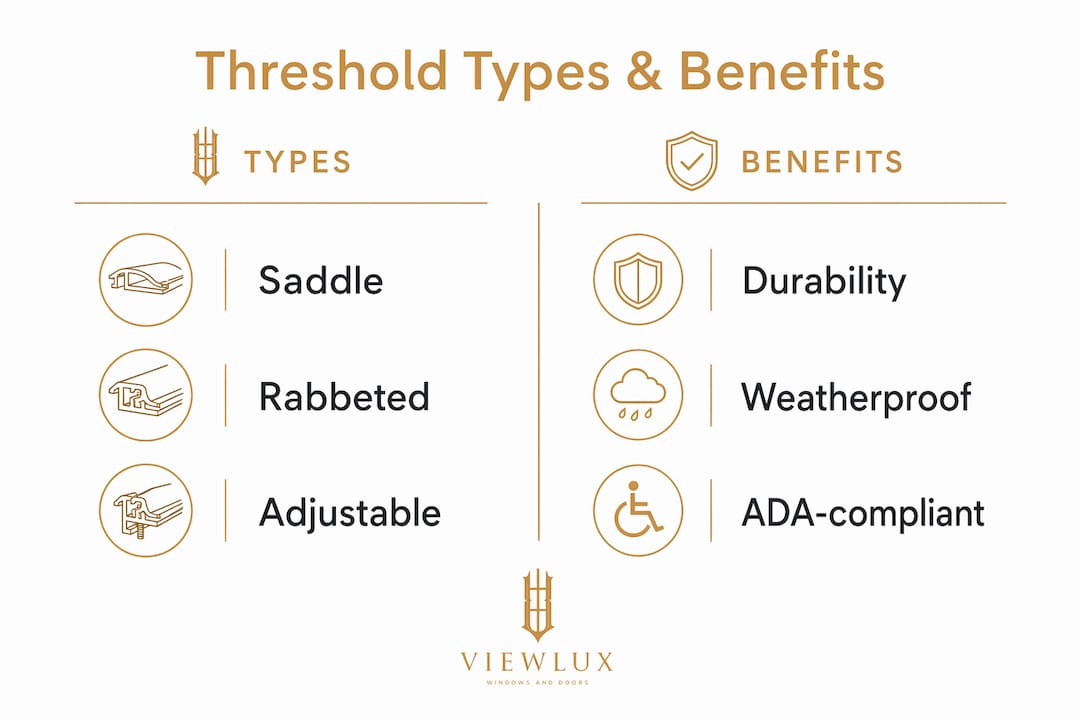
Aluminum thresholds come in four primary profiles, and each one solves a different problem. Knowing which profile fits your door environment is the first decision in any aluminum threshold detail selection process.
Threshold profile types
- Saddle threshold: A flat or slightly raised bar that spans the full door width. This is the most common residential profile and works well on level subfloors.
- Offset saddle threshold: One side sits higher than the other, accommodating a height difference between two floor surfaces, such as tile meeting hardwood.
- Rabbeted threshold: Features a recessed ledge that accepts the door bottom directly. This profile creates a tighter seal and is common in commercial applications.
- Adjustable threshold: Includes a vinyl or rubber insert that can be raised or lowered to close the gap between the door bottom and the threshold surface. Adjustable models allow fine-tuning to a 1/8 inch or less gap, which significantly reduces drafts and improves energy efficiency.
The ANSI/BHMA A156.21 standard governs threshold material, profile dimensions, and ADA compliance requirements. Selecting the wrong profile for the environment can trigger costly inspection failures.
Aluminum finish options and material comparisons
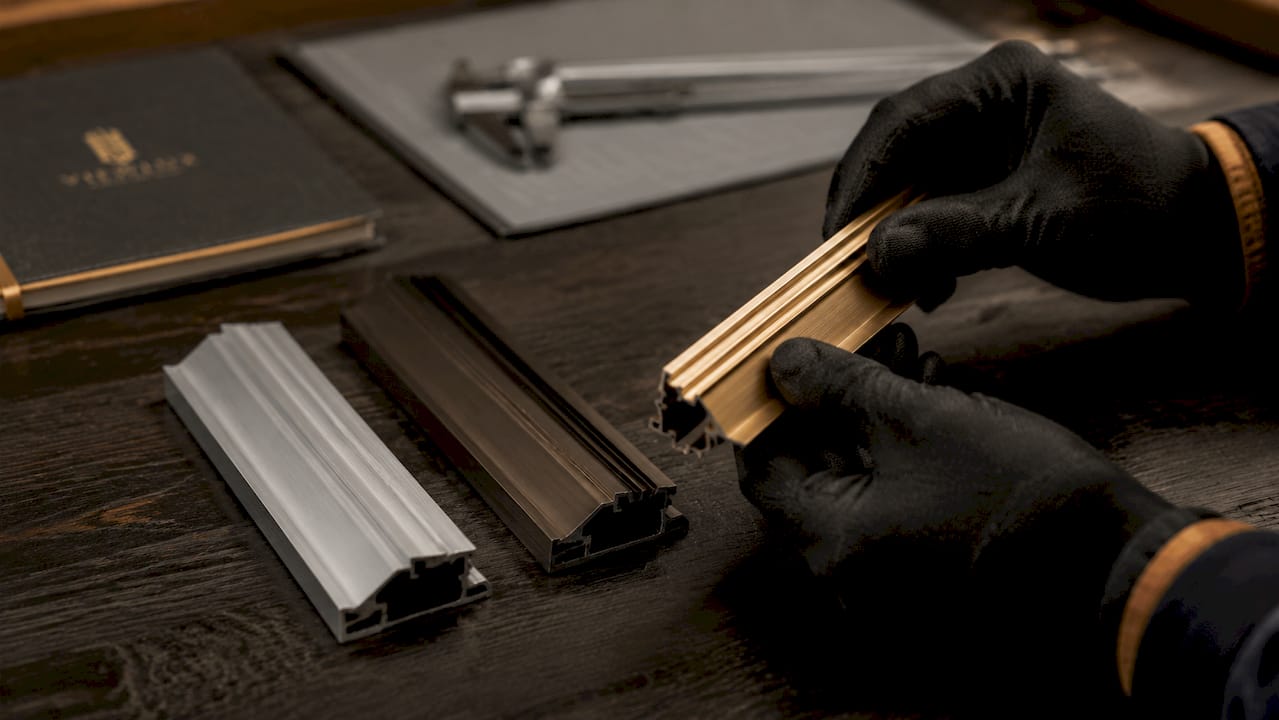
Aluminum thresholds are available in mill finish, dark bronze anodized, gold anodized, and black anodized. That variety lets builders and architects coordinate thresholds with door hardware across both residential and commercial projects. Mill finish is the most affordable and accepts paint well. Anodized finishes resist scratching and fading far better than painted surfaces, making them the right choice for high-traffic entries.
Bronze and brass thresholds offer strong aesthetic appeal for high-end residential projects. However, aluminum’s versatility and finish options make it the better choice for durability and cost-effective applications. Stainless steel outperforms aluminum in corrosion resistance for food service or coastal environments, but at a significantly higher cost. For most residential and light commercial work, aluminum delivers the best balance of performance and price. You can review the full range of aluminum door hardware options to match finishes across your entire door assembly.
Pro Tip: Anodized finishes are not just cosmetic. They add a hard oxide layer to the aluminum surface that resists corrosion and wear, making them worth the small price premium for exterior applications.
How to accurately measure and select the right aluminum threshold
Measurement errors are the leading cause of threshold installation failures. About 30% of threshold installation issues come from improper measurements, resulting in energy loss from gaps exceeding 1/8 inch. That statistic means one in three installations has a preventable flaw before a single screw is driven.
Step-by-step measurement process
- Measure the door opening width at three points. Measure at the top of the frame, the middle, and the floor level. Frame settling over time creates variation, and measuring at multiple points is the only way to catch it.
- Record the smallest measurement. The threshold must fit the narrowest point. Cutting to the widest measurement creates a gap on one side.
- Measure the existing floor height on both sides of the door. Note any height difference between interior and exterior surfaces. This determines whether you need a saddle, offset saddle, or rabbeted profile.
- Check the door bottom clearance. Swing the door and measure the gap between the door bottom and the subfloor. The threshold height must not exceed this clearance.
- Verify ADA compliance. The ADA maximum threshold height is 1/2 inch for all accessible routes. Commercial projects and any public-facing entry must meet this requirement without exception.
Threshold sizing reference
| Measurement | What to check | Why it matters |
|---|---|---|
| Opening width | Measure at top, middle, and floor | Frame settling creates width variation |
| Threshold height | Must not exceed 1/2 inch (ADA) | Prevents accessibility violations |
| Door bottom clearance | Gap between door and subfloor | Determines maximum threshold profile height |
| Floor height difference | Interior vs. exterior surface | Determines correct profile type |
Pro Tip: Always cut your threshold 1/16 inch shorter than your smallest width measurement. That small gap at each jamb lets the threshold sit without binding against the frame when temperatures cause the aluminum to expand.
How to install aluminum door thresholds step by step
A correct installation follows a fixed sequence. Skipping steps, especially subfloor preparation and caulking, is how thresholds fail within a single season. The full installation process includes subfloor cleaning, threshold cutting, caulk application, and screw fastening.
Installation steps
- Remove the old threshold. Unscrew and lift the existing threshold. Scrape away old caulk and adhesive residue completely.
- Clean and level the subfloor. Sweep and vacuum the subfloor. Fill any low spots with floor leveling compound. A flat subfloor prevents the threshold from rocking after installation.
- Cut the threshold to length. Use a miter saw or hacksaw with a fine-tooth blade. Cut to your measured width, accounting for the 1/16 inch clearance on each side.
- Dry-fit the threshold. Place the threshold without fasteners and check the fit. Confirm the door swings freely over it without dragging.
- Apply exterior-grade silicone caulk. Run a continuous bead of caulk along the full length of the subfloor where the threshold will sit. Exterior-grade silicone caulk is critical for preventing water intrusion and subfloor rot. Do not use latex caulk on exterior thresholds.
- Set the threshold and press firmly. Press the threshold into the caulk bed and align it with the door frame.
- Drill pilot holes and drive screws. Pre-drill to avoid cracking the aluminum. Use corrosion-resistant screws appropriate for the subfloor material.
- Adjust the height if using an adjustable model. Turn the adjustment screws to raise or lower the vinyl insert until the gap between the door bottom and the threshold is 1/8 inch or less.
- Wipe away excess caulk. Clean the caulk line before it cures for a finished appearance.
Common installation mistakes to avoid
- Skipping the caulk bed and relying on screws alone
- Cutting the threshold flush to the frame with no expansion gap
- Using drywall screws instead of corrosion-resistant fasteners
- Installing over an uneven subfloor without leveling first
- Failing to pre-drill pilot holes, which cracks the aluminum extrusion
Pro Tip: Run your caulk bead in one continuous pass rather than multiple short segments. Gaps in the caulk line are invisible after installation but create direct water pathways into the subfloor.
How to troubleshoot and maintain aluminum thresholds
Even a correctly installed threshold needs attention over time. The most common problems are air leakage, visible draft gaps, and surface corrosion on anodized finishes.
Diagnosing and fixing common problems
- Air leakage around the threshold: Hold a lit incense stick near the threshold perimeter on a windy day. Moving smoke identifies the leak point. Re-caulk the affected area with exterior-grade silicone.
- Gap between door bottom and threshold: Replace the door sweep first. A worn sweep is responsible for most draft complaints on otherwise correctly installed thresholds.
- Threshold rocking or shifting: The subfloor was not level at installation. Remove the threshold, level the subfloor, and reinstall with fresh caulk.
- Surface pitting or white oxidation on mill finish: Apply a thin coat of automotive paste wax twice per year. Wax fills micro-pores and slows oxidation without affecting the finish appearance.
- Threshold deforming under heavy loads: Extruded aluminum deforms under forklift or pallet jack traffic. Heavy-duty cast aluminum or reinforced sill plates are the correct specification for industrial or warehouse entries.
For coastal or high-humidity environments, stainless steel fasteners are mandatory. Standard zinc-plated screws corrode and stain the aluminum surface within two years in salt air. Viewluxwindows offers heavy-duty door configurations built for demanding environments where standard extruded aluminum is not sufficient.
Pro Tip: Clean anodized aluminum thresholds with a pH-neutral soap and water only. Alkaline cleaners strip the anodized layer and accelerate corrosion, which voids most manufacturer warranties.
Key takeaways
Aluminum door thresholds require the correct profile, precise measurement at three points, ADA-compliant height, exterior-grade caulk, and corrosion-resistant fasteners to perform reliably over time.
| Point | Details |
|---|---|
| Profile selection | Match the threshold profile (saddle, rabbeted, adjustable) to the door environment and floor height difference. |
| ADA compliance | Keep threshold height at or below 1/2 inch on all accessible routes per ANSI/BHMA A156.21. |
| Measurement accuracy | Measure width at three frame points and cut 1/16 inch short to prevent binding and gaps. |
| Caulk application | Use exterior-grade silicone in a continuous bead to block water intrusion and subfloor rot. |
| Material selection | Choose heavy-duty cast aluminum for industrial traffic; use anodized finishes for coastal or high-humidity environments. |
Why I think most threshold guides skip the details that actually matter
Most installation guides treat threshold selection as a simple size-matching exercise. In practice, the profile choice and the measurement method determine whether the installation holds up or fails. I have seen adjustable thresholds installed on commercial entries where the vinyl insert was never adjusted after installation. The result was a 3/8 inch gap that defeated the entire purpose of the product.
The ADA height rule is another area where builders cut corners. A threshold at 5/8 inch feels trivial until an accessibility inspection flags it. Choosing the correct threshold profile based on door environment and ADA compliance is the difference between passing inspection on the first visit and paying for remediation work.
My recommendation for any serious project is to specify anodized aluminum over mill finish, even on interior thresholds. The added durability costs very little at the product level but saves significant maintenance time over a five-year period. For high-end residential work, a dark bronze anodized threshold paired with matching door hardware creates a finished, intentional look that clients notice. For builders specifying multiple doors, reviewing custom aluminum door configurations before finalizing threshold specs prevents costly mismatches between door profiles and sill plates.
— Liran
Viewluxwindows aluminum door solutions for builders and homeowners
Viewluxwindows designs and manufactures custom aluminum door systems with threshold configurations built to match each project’s specific requirements. With NFRC and AAMA certifications, every product meets the energy efficiency and durability standards that architects and builders depend on for code compliance and long-term performance.

Viewluxwindows sells direct to consumers, saving clients up to 50% compared to traditional dealers. That pricing model makes premium aluminum door hardware accessible for both single-home renovations and large commercial builds. Explore the full range of aluminum door hardware options to specify thresholds, finishes, and profiles that match your project from the ground up. Showrooms are open across California, Colorado, and Nevada for in-person consultation.
FAQ
What is the maximum ADA-compliant threshold height?
The ADA maximum threshold height is 1/2 inch for all accessible routes. The ANSI/BHMA A156.21 standard governs this requirement for both residential and commercial applications.
What type of caulk should I use when installing a door threshold?
Use exterior-grade silicone caulk. It resists water intrusion, remains flexible through temperature changes, and prevents subfloor rot under the threshold.
How do I know if my threshold is causing energy loss?
A gap exceeding 1/8 inch between the door bottom and the threshold surface causes measurable air leakage. Improper measurements account for about 30% of threshold installation issues that lead to energy loss.
When should I choose cast aluminum over extruded aluminum?
Choose heavy-duty cast aluminum for industrial or warehouse entries where forklift or pallet jack traffic is present. Extruded aluminum deforms under those loads.
What finish is best for an exterior aluminum threshold in a coastal environment?
Black anodized or dark bronze anodized finishes offer the best corrosion resistance for coastal environments. For extreme salt-air exposure, pair an anodized threshold with stainless steel fasteners to prevent screw corrosion from staining the aluminum surface.
Recommended
- Custom Aluminum Door Configurations Explained for Builders – ViewLux Windows And Doors, Inc.
- Aluminum Window Installation Sequence: 2026 Builder Guide – ViewLux Windows And Doors, Inc.
- Types of Aluminum Door Hardware Options Explained – ViewLux Windows And Doors, Inc.
- Catalog – ViewLux Windows And Doors, Inc.


