
Aluminum replacement windows are the superior choice for longevity, structural strength, and design flexibility when compared to vinyl frames. The benefits of aluminum over vinyl replacement windows extend well beyond aesthetics: thermally broken aluminum frames now achieve U-factors as low as 0.30, nearly matching vinyl’s 0.28–0.32 range, while lasting an average of 38 years versus vinyl’s 22. For homeowners and builders prioritizing lifecycle value, coastal performance, or modern architectural design, aluminum frames deliver measurable advantages that vinyl cannot match. Viewluxwindows, certified by both NFRC and AAMA, offers direct-to-consumer aluminum solutions that bring these advantages within reach at up to 50% below traditional dealer pricing.
1. Benefits of aluminum over vinyl replacement windows: durability that lasts decades
Aluminum windows outlast vinyl by a significant margin. Thermally broken aluminum frames average a 38-year lifespan, while vinyl averages just 22 years. That 16-year gap represents one full replacement cycle for a vinyl window, adding thousands of dollars in cost and disruption over a home’s life.
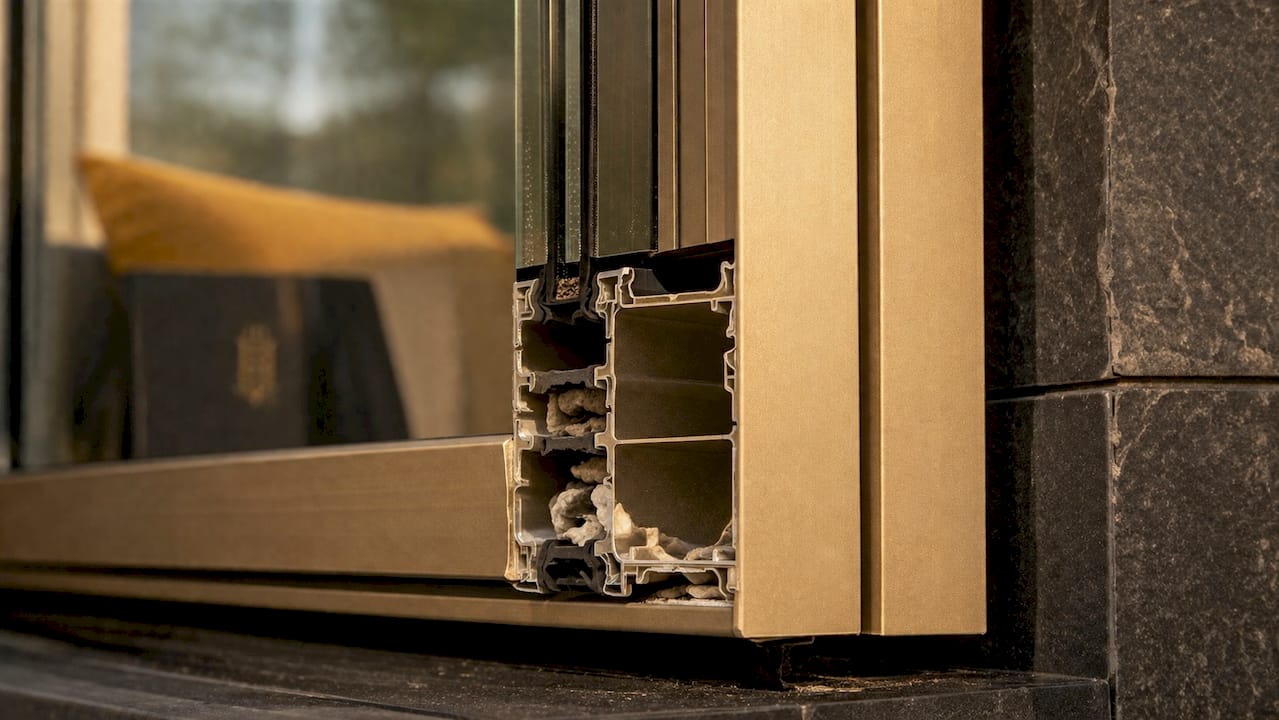
The durability gap widens in demanding environments. In coastal zones, vinyl windows often fail within 10–15 years due to UV degradation and salt-air exposure, causing chalking, discoloration, and seal failure. Aluminum frames with powder-coat or anodized finishes resist these forces and remain structurally sound for 30–40 years in the same conditions.
Aluminum also maintains dimensional stability under temperature swings. Vinyl expands and contracts more aggressively with heat and cold, which gradually compromises frame tolerances, causes warping, and accelerates seal failure. Aluminum holds its shape, which matters especially for large-format windows where even minor frame movement creates gaps.
- Aluminum lifespan: 38 years average (thermally broken frames)
- Vinyl lifespan: 22 years average; 10–15 years in coastal climates
- Aluminum resists UV, salt air, and thermal cycling without warping
- Powder-coat finishes withstand sustained temperatures up to 150°F
- Structural integrity supports larger glass spans without reinforcement
Pro Tip: If your project is within five miles of the ocean, specify powder-coated or anodized aluminum frames. Vinyl will chalk and lose its seal before your mortgage is halfway done.
2. Energy efficiency: how aluminum closes the gap with vinyl
Vinyl’s main historical advantage over aluminum was thermal performance. Vinyl (uPVC) is a natural insulator, while bare aluminum conducts heat readily. That advantage has narrowed considerably with modern thermal-break technology.
Thermal-break aluminum frames insert composite plastic barriers between the inner and outer frame sections. This interrupts the conductive path that makes standard aluminum frames energy-inefficient. The result is a frame that performs within 7–12% of vinyl’s inherent insulation value.
Modern thermally broken aluminum achieves U-factors as low as 0.30. Vinyl windows typically range from 0.28 to 0.32. That difference is real but minor in practice. Over a full heating and cooling season, the gap in energy costs between a well-specified aluminum window and a mid-grade vinyl window is small compared to the savings from avoiding one full replacement cycle.
| Frame Type | U-Factor Range | Avg. Lifespan | Coastal Suitability |
|---|---|---|---|
| Thermally broken aluminum | 0.30–0.35 | 38 years | Excellent |
| Standard vinyl (uPVC) | 0.28–0.32 | 22 years | Poor to moderate |
| Standard aluminum (no break) | 0.50+ | 38 years | Excellent |
Pro Tip: Always confirm “thermally broken” in the product specification before purchasing aluminum windows. Standard aluminum frames without a thermal break conduct heat freely and will underperform vinyl on energy costs.
Pairing thermally broken aluminum frames with energy-efficient glazing options such as low-E coatings or argon-filled double panes closes the remaining performance gap further. The frame material matters, but glazing accounts for the majority of a window’s thermal performance.
3. Aesthetic and architectural advantages aluminum delivers
Aluminum’s structural strength allows frame profiles that vinyl physically cannot achieve. Aluminum profiles can be 40–60% thinner than equivalent vinyl frames, enabling larger glass panes and cleaner sightlines. That difference is visible and significant in any room with a view.
Vinyl frames require internal reinforcements to maintain rigidity at larger sizes. Those reinforcements add bulk. In a floor-to-ceiling window application, a vinyl frame’s visible width can be nearly double that of an aluminum frame carrying the same glass load. Architects and designers working on contemporary or upscale residential projects consistently choose aluminum for this reason.
Color flexibility is another area where aluminum leads. Powder coating provides unlimited color options and stable finishes that hold up under prolonged sun exposure and temperatures up to 150°F. Vinyl color options are limited by the manufacturing process, and dark or saturated colors are particularly prone to heat absorption, warping, and fading over time. Aluminum’s frame color options include deep charcoals, matte blacks, and custom architectural tones that vinyl simply cannot replicate reliably.
- Slimmer profiles increase visible glass area by 40–60% compared to vinyl
- Powder-coat finishes available in virtually any color, including dark saturated tones
- Dimensional stability preserves aesthetics over decades, even in severe climates
- Large-format and floor-to-ceiling spans are structurally achievable without added bulk
- Contemporary and upscale design styles align naturally with aluminum’s clean lines
4. Cost comparison: upfront price versus lifetime value
Aluminum windows cost more at the point of purchase. A standard 3’x5’ aluminum window runs approximately $600–$1,200, while vinyl ranges from $450–$800, a 15–30% price difference at retail. That gap feels significant when you are pricing a full house replacement.
The retail price gap is larger than the actual material cost difference. Raw material costs differ by only $40–$60 per window. Retail markups, not raw materials, drive most of the perceived price premium. This means the true cost of choosing aluminum is smaller than the sticker price suggests.
Lifecycle cost tells a different story entirely. Over 50 years, aluminum windows cost approximately 18% less than vinyl when replacement and maintenance expenses are included. The total estimated lifecycle cost runs around $17,000 for aluminum versus $33,000 for vinyl over that period. One avoided replacement cycle accounts for most of that difference.
Contractors also recognize aluminum’s value. Premium projects with aluminum windows yield profit margins of 35–40%, compared to 30% for vinyl. That margin reflects client willingness to pay for quality and longevity, not just a material markup.
Pro Tip: When comparing bids, ask for the per-window raw material cost alongside the installed price. The gap between aluminum and vinyl narrows considerably when you separate material cost from markup. A detailed cost comparison by manufacturer can help you evaluate what you are actually paying for.
5. Choosing aluminum or vinyl based on your project
The right frame material depends on the specific demands of your project. Aluminum is the clear choice in several situations, while vinyl remains a practical option in others.
Choose aluminum when:
- The project is in a coastal or high-humidity environment where salt-air corrosion is a real risk
- Window openings are large format, floor-to-ceiling, or architecturally prominent
- The design calls for slim profiles, dark colors, or custom finishes
- You are building or renovating for the long term and want to avoid a replacement cycle
- The project is commercial, mixed-use, or high-end residential where aesthetics and durability are both priorities
Choose vinyl when:
- The budget is fixed and the project involves standard-size windows in a mild inland climate
- The renovation is short-term or the property will be sold within 10–15 years
- Energy efficiency is the single top priority and thermal-break aluminum is not in the budget
For builders working on mixed projects, a practical approach is to use aluminum on the primary facades and large openings where aesthetics and durability matter most, then use vinyl on secondary or utility windows where cost control is the priority. This hybrid approach delivers visual impact where it counts without overextending the budget. The 2026 builder installation guide from Viewluxwindows covers sequencing and specification details for exactly this type of mixed-material project.
Key takeaways
Aluminum replacement windows deliver lower lifetime costs, superior durability, and greater design flexibility than vinyl, making them the better investment for long-term owners and design-focused projects.
| Point | Details |
|---|---|
| Lifespan advantage | Aluminum lasts 38 years on average versus 22 years for vinyl, avoiding one full replacement cycle. |
| Energy efficiency parity | Thermally broken aluminum achieves U-factors as low as 0.30, within the vinyl range of 0.28–0.32. |
| Aesthetic flexibility | Aluminum profiles are 40–60% thinner than vinyl, enabling larger glass spans and custom powder-coat colors. |
| Lifecycle cost savings | Over 50 years, aluminum costs approximately 18% less than vinyl when replacements are factored in. |
| Coastal performance | Powder-coated aluminum resists salt-air and UV degradation where vinyl fails within 10–15 years. |
What I’ve learned from watching homeowners choose between aluminum and vinyl
The most common mistake I see is homeowners treating the upfront price as the full cost of the decision. They see a $200–$400 per window difference and choose vinyl. Then, 15 years later, they are replacing windows again. The math never works out in vinyl’s favor for anyone planning to stay in their home.
The second mistake is assuming aluminum is always the energy-efficiency loser. That was true 20 years ago with standard aluminum frames. Thermal-break technology changed that. When I walk through a project spec and see “thermally broken aluminum” confirmed in writing, I know that energy concern is largely resolved. The remaining gap between aluminum and vinyl on U-factor is real but minor in terms of annual heating and cooling costs.
What I find most underappreciated is aluminum’s design impact. Slimmer frames are not just an aesthetic preference. They change how a room feels. A floor-to-ceiling window with an aluminum frame brings in noticeably more light than the same opening with a vinyl frame. That is a quality-of-life difference that shows up every single day.
My honest advice: if you are renovating a home you plan to own for more than 10 years, or if the project involves any coastal exposure or large-format windows, aluminum is the correct choice. The long-term ROI for homeowners consistently favors aluminum once you account for the full ownership period.
— Liran
Viewluxwindows aluminum window solutions for homeowners and builders
Viewluxwindows designs and manufactures premium aluminum windows and doors sold direct to homeowners, architects, and builders, with pricing up to 50% below traditional dealer rates. Every product goes through a 26-step production process and carries NFRC and AAMA certifications for verified energy efficiency and structural performance.

For homeowners and builders ready to specify aluminum, the upscale residential window packages at Viewluxwindows cover a full range of thermally broken frame configurations, glazing options, and powder-coat finishes. Showrooms are open across California, Colorado, and Nevada. For custom configurations or project consultations, the Viewluxwindows team provides direct technical support to match frame specifications to your design and climate requirements. Visit aluminum benefits overview to see the full product range and request a quote.
FAQ
How long do aluminum windows last compared to vinyl?
Thermally broken aluminum windows average 38 years, while vinyl averages 22 years. In coastal climates, vinyl often requires replacement within 10–15 years due to salt-air and UV degradation.
Are aluminum windows more energy efficient than vinyl?
Modern thermally broken aluminum windows achieve U-factors as low as 0.30, placing them within the vinyl range of 0.28–0.32. The energy performance gap between the two materials is now minor when thermal-break technology is specified.
Why do aluminum windows cost more upfront?
Retail markups account for most of the price difference. Raw material costs differ by only $40–$60 per window. Over a 50-year period, aluminum’s longer lifespan makes it approximately 18% cheaper than vinyl in total lifecycle cost.
Are aluminum windows better for coastal homes?
Aluminum is the preferred choice for coastal applications. Powder-coated or anodized aluminum frames resist salt-air corrosion and UV exposure, while vinyl chalks and loses its seal within 10–15 years in the same conditions.
Can aluminum windows achieve slim, modern frame profiles?
Aluminum profiles can be 40–60% thinner than vinyl frames of equivalent structural strength. That allows larger glass panes, floor-to-ceiling spans, and the clean sightlines associated with contemporary architectural design.
Recommended
- Why Aluminum Windows Suit Modern Remodels – ViewLux Windows And Doors, Inc.
- Aluminum Windows ROI Explained for Homeowners in 2026 – ViewLux Windows And Doors, Inc.
- Aluminum Window Cost Comparison: Manufacturers Ranked – ViewLux Windows And Doors, Inc.
- Aluminum Window Frame Color Options for Modern Homes – ViewLux Windows And Doors, Inc.


