
Aluminum window corrosion in coastal buildings is defined as the accelerated breakdown of aluminum frames, finishes, and hardware caused by salt-laden air and moisture in marine environments. Aluminum forms a natural oxide layer that resists corrosion in most conditions, but that protection has clear limits near the ocean. Standard aluminum windows show visible corrosion within 2–3 years when installed within 500 meters of the shoreline. That timeline shrinks further in high-exposure zones with direct ocean-facing orientations. Industry standards such as AAMA 2604 and AAMA 2605 exist specifically to address these conditions, and Grade 316 stainless steel hardware is the accepted minimum for coastal projects. Builders and property owners who understand these requirements from the start avoid the costly cycle of premature failure and replacement.
What causes aluminum window corrosion in coastal environments?
Aluminum does not rust the way steel does. Instead, it forms aluminum oxide, a thin, hard layer that normally seals the metal from further attack. The problem near the ocean is that salt air disrupts this oxide layer, causing pitting corrosion. Chloride ions from salt spray penetrate microscopic pores in the oxide, breaking down protection at specific points rather than across the whole surface.
Pitting corrosion is particularly damaging because it concentrates attack in small areas, creating deep craters that weaken the frame structurally. The white powdery residue visible on corroded aluminum frames is aluminum oxide byproduct, a sign that active pitting is already underway. At that stage, surface cleaning alone does not reverse the damage.
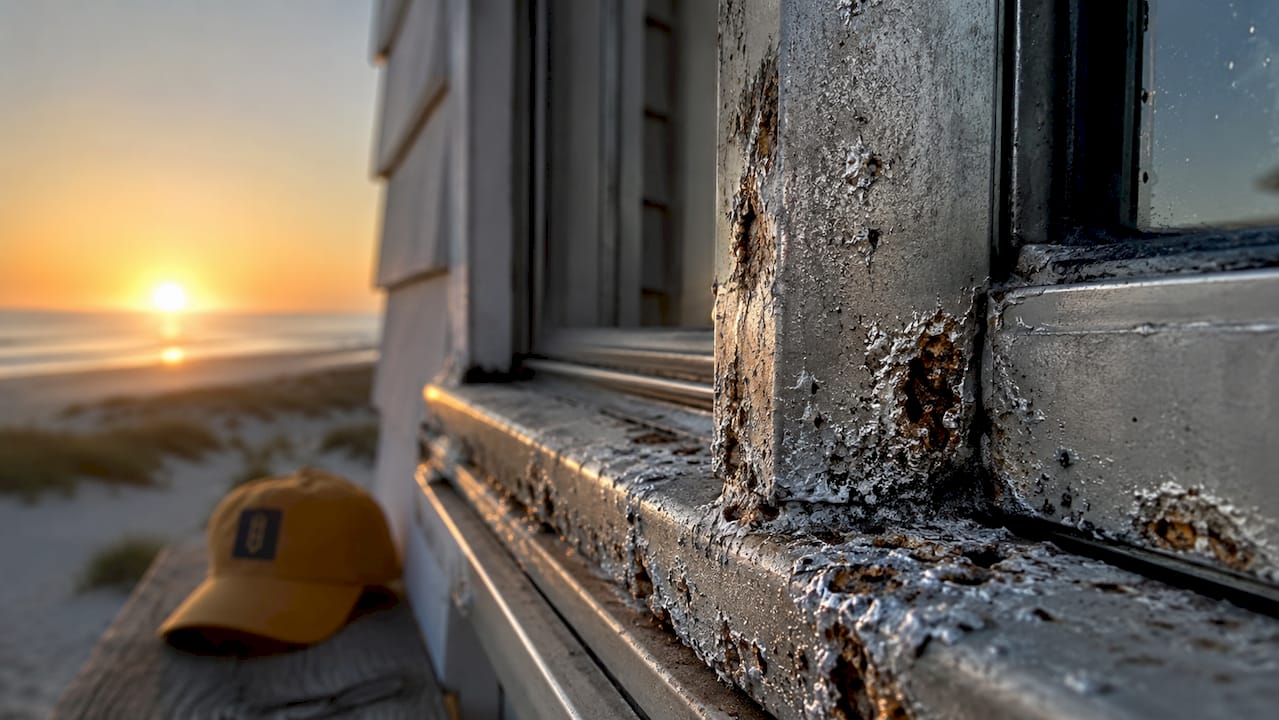
Galvanic corrosion is a second threat that builders often overlook. When aluminum contacts a dissimilar metal, such as standard carbon steel fasteners or brass fittings, an electrochemical reaction accelerates corrosion at the contact point. Salt water acts as the electrolyte that drives this reaction. The result is hidden damage inside joints and curtain wall assemblies that does not appear on the surface until the frame is already compromised.
The self-healing oxide layer that makes aluminum durable in most climates is insufficient on its own in aggressive salt-air environments. Factory-controlled thick anodizing combined with specialized coatings provides the real protection in marine conditions.
- Salt spray chlorides penetrate the oxide layer and initiate pitting corrosion.
- White powder on frames signals active aluminum oxide breakdown.
- Galvanic corrosion occurs when aluminum contacts dissimilar metals at fastener points.
- Microscopic coating pores allow salt ingress even on finished frames.
- The natural oxide layer regenerates slowly but cannot keep pace with continuous salt exposure.
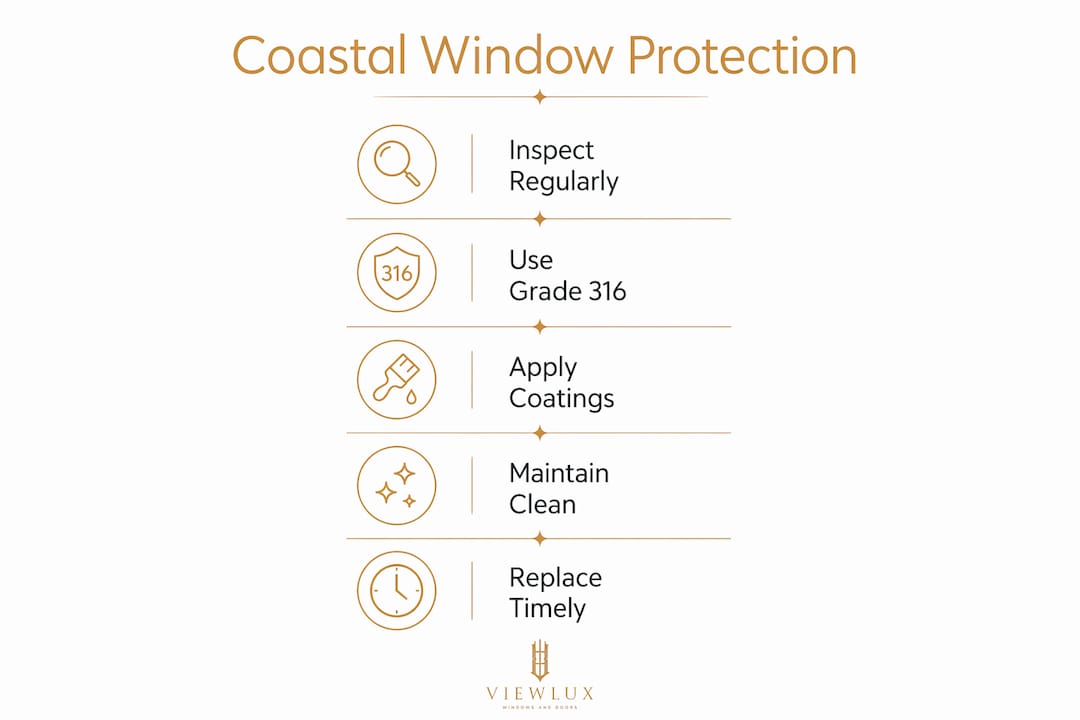
Pro Tip: Inspect window joints and fastener contact points first. These areas corrode before the visible frame surface shows any sign of damage.
How do industry standards and hardware requirements improve coastal window durability?
Grade 316 stainless steel is the required hardware material for all coastal projects within 5 kilometers of the shoreline. Grade 304 stainless steel may rust within 3–5 years when installed within 1 kilometer of the coast. The difference between the two grades is molybdenum content. Grade 316 contains molybdenum, which blocks chloride attack at the metal surface. Grade 304 does not, making it marginal at best in marine conditions.
Coating standards set the performance floor for aluminum finishes in coastal zones. AAMA 2604 specifies a minimum coating thickness and requires the finish to pass accelerated weathering tests. AAMA 2605 sets a higher bar, requiring coatings to withstand 4,000 hours of salt spray testing. Ordinary powder coatings fail within months near salt spray unless they meet AAMA 2604 or AAMA 2605 specifications. Marine-grade coatings that meet these standards last 10 or more years under the same conditions.
| Specification | Standard Grade | Marine Grade |
|---|---|---|
| Hardware material | Grade 304 stainless steel | Grade 316 stainless steel |
| Coating standard | Interior-grade powder coat | AAMA 2604 or AAMA 2605 |
| Expected lifespan near coast | 2–5 years | 10+ years |
| Salt spray test hours | Not rated | 4,000+ hours (AAMA 2605) |
Hidden corrosion inside curtain walls and at fastener contact points is a documented risk in multi-unit coastal projects. Corrosion within curtain walls increases long-term maintenance costs and reduces asset value before any visible damage appears on the exterior. Specifying Grade 316 hardware throughout, including concealed fasteners, eliminates this failure mode.
Pro Tip: Request material certification documents for all hardware before installation. Suppliers sometimes substitute Grade 304 for Grade 316 without disclosure, particularly on fasteners and hinges.
What surface treatments best protect aluminum windows on the coast?
Anodizing and powder coating are the two primary surface treatments for coastal aluminum windows. Each performs differently depending on distance from the ocean and exposure severity. Choosing the wrong treatment for the exposure level is one of the most common specification errors in coastal construction.
Anodizing thickens the natural oxide layer through an electrochemical process, producing a layer of at least 15 microns. This layer bonds directly to the aluminum and cannot peel or flake. Anodizing provides the best corrosion resistance for severe marine exposure, particularly for windows within 500 meters of the shoreline. The trade-off is limited color range compared to powder coating.
Powder coating applies a polymer finish up to 80 microns thick and offers broad color flexibility. Anodized coatings provide a 15-micron oxide layer while powder coats reach up to 80 microns, but thickness alone does not determine performance. Powder coating meeting AAMA 2604 or AAMA 2605 standards performs well at moderate coastal distances, typically 500 meters to 2 kilometers from the shore. Below that threshold, anodizing is the more reliable choice.
Duplex systems combine anodizing and powder coating in a single product. The anodized layer acts as a primer, and the powder coat provides color and additional barrier protection. Duplex systems extend service life beyond either treatment alone, but they carry a higher upfront cost. For high-value coastal multifamily projects, the total cost of ownership calculation favors duplex systems over single-treatment options.
- Within 500 meters of shore: specify anodized finish, minimum 20-micron thickness.
- 500 meters to 2 kilometers: AAMA 2604-compliant powder coat is acceptable.
- Beyond 2 kilometers: standard AAMA 2604 powder coat with annual maintenance.
- For maximum lifespan on any coastal project: duplex anodize-plus-powder-coat system.
- Verify coating thickness with a dry film thickness gauge before accepting delivery.
What maintenance practices prevent corrosion and extend window lifespan?
Proper maintenance extends the service life of marine-grade aluminum windows from the 2–3 year failure window of unprotected frames to 15 or more years. The maintenance program is straightforward, but consistency matters more than complexity.
- Rinse with fresh water weekly. Manufacturers recommend weekly fresh water rinsing to remove salt buildup before it concentrates on the frame surface. Focus on sill channels, weep holes, and frame corners where salt deposits accumulate fastest.
- Clean with mild soap and water monthly. Use a pH-neutral soap and a soft cloth. Scrubbing with abrasive pads scratches the coating and creates entry points for chlorides.
- Avoid acidic cleaners entirely. Acidic household cleaners break down protective polymer coatings on aluminum windows. Common bathroom and kitchen sprays fall into this category. Check the pH before using any cleaning product on a coated aluminum surface.
- Wax powder-coated frames annually. A carnauba-based wax seals the coating surface and prevents chalking. Apply after the monthly cleaning cycle, not as a substitute for it.
- Perform the tape test every six months. Apply a strip of high-adhesion tape to the frame surface, press firmly, and pull it off cleanly. The tape test detects coating delamination before visible corrosion appears. If coating material lifts with the tape, schedule a professional inspection immediately.
Pro Tip: Never use a pressure washer on coastal aluminum windows. High-pressure water forces salt and moisture into frame joints and behind glazing seals, accelerating the exact corrosion you are trying to prevent.
How to select the right aluminum windows for coastal buildings
Selecting the right window system starts with accurately assessing distance from the shoreline and prevailing wind direction. A building 400 meters from the ocean on the windward side faces more aggressive salt exposure than one 800 meters away on the leeward side. Exposure severity, not just distance, drives the specification.
Verify compliance documentation before purchasing. Reputable suppliers provide test reports confirming AAMA 2604 or AAMA 2605 coating compliance, Grade 316 stainless steel certification for all hardware, and sealing system performance data. The aluminum window system selection process should include a review of drainage design, cut edge protection, and impact resistance ratings for the specific coastal zone.
- Confirm Grade 316 stainless steel for all hardware, including concealed fasteners.
- Require AAMA 2605 coating certification for windows within 500 meters of shore.
- Check that frame drainage channels are designed to prevent standing water.
- Specify cut edge protection on all machined frame sections to prevent exposed aluminum.
- Review the installation sequence with your contractor to prevent concealed corrosion at anchor points.
- Calculate total cost of ownership over 15 years, not just purchase price.
Budget decisions based on upfront cost alone consistently produce the worst outcomes in coastal construction. A window system that costs 30% more at purchase but lasts three times longer delivers a lower total cost. Developers underestimate the hidden corrosion risks from fasteners and hardware, which significantly affect long-term window system integrity and maintenance costs in coastal multi-unit projects.
Key takeaways
Aluminum window corrosion in coastal buildings is preventable with the right combination of marine-grade hardware, AAMA-compliant coatings, and a consistent maintenance schedule.
| Point | Details |
|---|---|
| Corrosion timeline | Standard aluminum windows fail visibly within 2–3 years at 0–500 meters from shore. |
| Hardware standard | Grade 316 stainless steel is required for all hardware within 5 km of the coastline. |
| Coating specification | AAMA 2605-compliant powder coat or anodized finish is the minimum for severe marine exposure. |
| Maintenance frequency | Weekly fresh water rinsing and annual waxing extend window life to 15 or more years. |
| Hidden risk | Corrosion inside curtain walls and at fastener points causes damage before any surface signs appear. |
The real cost of getting coastal windows wrong
I have reviewed enough coastal building projects to say with confidence that the most expensive decision is not choosing the wrong coating. It is choosing the wrong mindset. Builders who treat coastal windows as a standard specification item and adjust later consistently pay more over the life of the building than those who specify correctly from day one.
The hidden cost pattern is predictable. Standard windows go in because they are cheaper. Salt air attacks the hardware and coating within two to three years. The owner pays for cleaning, then touch-up, then full replacement. On a multifamily building with 80 or more window units, that replacement cycle costs far more than the premium for marine-grade specification would have.
What I find most overlooked is the fastener problem. Architects and builders focus on the visible frame finish and miss the Grade 304 screws holding the frame to the rough opening. Those screws corrode, expand, and crack the frame from the inside. By the time the damage is visible, the frame is structurally compromised. Specifying corrosion-resistant hardware throughout, including every concealed fastener, is not optional in a coastal project.
My practical advice: build a maintenance schedule into the purchase agreement or building management plan before the project closes. Weekly rinsing and the tape test twice a year cost almost nothing. Skipping them for three years and then replacing windows costs a great deal.
— Liran
Viewluxwindows marine-grade aluminum windows for coastal properties
Viewluxwindows designs and manufactures aluminum window systems built to perform in marine environments. Every product in the coastal lineup uses Grade 316 stainless steel hardware throughout, including concealed fasteners, and carries AAMA 2604 and AAMA 2605 coating certifications. Anodized and powder-coated finish options are available to match exposure severity and design requirements.

Viewluxwindows sells direct to homeowners, architects, builders, and contractors, delivering premium window value at up to 50% less than traditional dealer pricing. Showrooms are open across California, Colorado, and Nevada. The full product catalog covers custom aluminum configurations for every coastal building type. Contact the Viewluxwindows team to review your project specifications and confirm the right coating and hardware standard for your site’s exposure level.
FAQ
What causes aluminum windows to corrode near the ocean?
Salt air contains chloride ions that penetrate the aluminum oxide layer and cause pitting corrosion. Galvanic corrosion at fastener contact points accelerates the damage further.
How long do standard aluminum windows last near the coast?
Standard aluminum windows show visible corrosion within 2–3 years when installed within 500 meters of the shoreline. Marine-grade windows with proper coatings and hardware last 15 or more years with regular maintenance.
What hardware grade is required for coastal aluminum windows?
Grade 316 stainless steel is required for all hardware within 5 kilometers of the shoreline. Grade 304 stainless steel corrodes within 3–5 years within 1 kilometer of the coast and does not meet marine-grade standards.
What is the best coating for aluminum windows in salt air?
Anodized finishes with a minimum 20-micron thickness perform best within 500 meters of the ocean. AAMA 2605-compliant powder coating is acceptable at moderate coastal distances of 500 meters to 2 kilometers.
How often should coastal aluminum windows be cleaned?
Manufacturers recommend rinsing with fresh water weekly and cleaning with mild soap monthly. Annual waxing of powder-coated frames prevents chalking and seals the coating surface against salt buildup.
Recommended
- Aluminum Window Installation Sequence: 2026 Builder Guide – ViewLux Windows And Doors, Inc.
- Aluminum Window Powder Coat Finish: 2026 Guide – ViewLux Windows And Doors, Inc.
- European Aluminum Window System Selection Guide 2026 – ViewLux Windows And Doors, Inc.
- Why Aluminum Windows Suit Modern Remodels – ViewLux Windows And Doors, Inc.


