
Aluminum window cost comparison across manufacturers is the fastest way to avoid overpaying by hundreds of dollars per unit. Installed prices range from $600 to $1,200 per window, yet the factory cost gap between aluminum and vinyl is only $40–$60. That spread tells you most of the price difference comes from branding, distribution, and sourcing strategy, not raw materials. Homeowners and builders who understand this dynamic make sharper purchasing decisions and protect their budgets without sacrificing quality.
1. What drives aluminum window pricing at the manufacturer level?
Aluminum window cost breaks down into five components: frame (30–45%), glass (25–40%), hardware (10–15%), fabrication (10–20%), and logistics (5–15%). Each component creates a lever that manufacturers adjust differently, which is why two windows that look identical on a spec sheet can carry very different price tags.
Glass is the most variable line item. Standard double glazing sits at the low end of that 25–40% range, but triple glazing adds 20–30% to the total unit cost. For a $900 window, that means triple glazing alone can push the price past $1,100 before any other upgrades. Builders specifying large glazed facades need to account for this early in the budget phase.
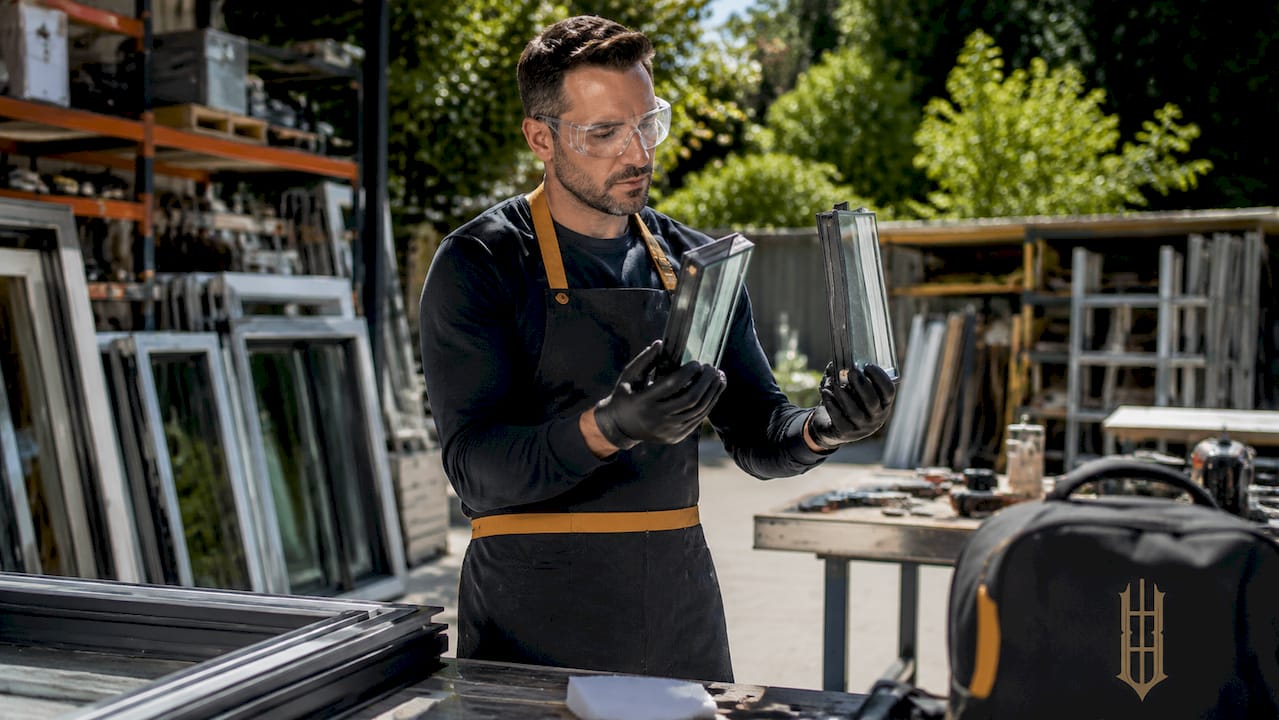
Fabrication costs reflect the manufacturer’s process complexity. A 26-step production process with precision CNC cutting costs more to run than a simplified assembly line, but it also produces tighter tolerances and better long-term performance. Understanding component quality in manufacturing helps explain why two manufacturers charging similar prices can deliver very different results.
Pro Tip: Ask any manufacturer for an itemized cost breakdown by component. If they refuse, that is a signal their pricing is padded with distribution markup rather than material or fabrication quality.
| Cost Component | Typical Share of Unit Price |
|---|---|
| Frame (aluminum extrusion) | 30–45% |
| Glass (glazing unit) | 25–40% |
| Hardware (locks, hinges, handles) | 10–15% |
| Fabrication (cutting, welding, finishing) | 10–20% |
| Logistics (shipping, handling) | 5–15% |
2. How do major aluminum window manufacturers compare on price?
Brand pricing varies sharply across the aluminum window market. Jeld-Wen aluminum windows cost $356–$917, Andersen ranges from $329 to $1,100, Marvin premium storm windows run $800–$2,500, and Castle Windows sits at the entry level with $300–$610. These are retail figures, which means distribution markups are already baked in.
The price gap between brands rarely reflects a proportional quality gap. Distribution markups, branding, and local overhead create most of the retail price difference despite small factory cost gaps. A $1,100 Andersen unit and a $700 mid-tier unit may share similar thermal performance specs, with the difference sitting in brand premium and dealer margin.
Key differentiators worth comparing across brands:
- Thermal break technology: Present in most mid-to-premium units; absent in some entry-level products
- Hardware sourcing: Premium brands often specify Roto® or GU® hardware; budget lines use generic fittings
- Customization depth: Marvin and Andersen offer extensive color and size options; Castle Windows is more limited
- Warranty terms: Andersen offers a 20-year glass warranty on select lines; entry-level brands typically offer 5–10 years
- Certification status: NFRC and AAMA certifications signal verified performance; not all brands carry both
Pro Tip: When comparing brands, request the NFRC label data for the specific unit you are quoting, not just the brand’s general performance claims. Labels are unit-specific and legally binding.
Energy performance differences between top manufacturers are often within 5%, which means warranty terms and local support often matter more than marginal thermal performance differences when choosing between comparable brands.
3. Factory-direct vs. local suppliers: what is the real cost difference?
Factory-direct sourcing from manufacturers, including those based in China, delivers savings of 25–50% compared to buying through local distributors. Logistics add 5–12% back to the total project cost, but the net saving on large orders remains substantial. For a builder purchasing 50 windows at $900 retail each, a 30% factory-direct saving equals $13,500 in recovered budget.
Local suppliers offer faster lead times and easier warranty resolution. That speed has real value on tight construction schedules where a delayed window shipment can stall an entire project phase. The tradeoff is higher labor and overhead costs that local dealers pass directly to buyers.
Factory-direct sourcing can save buyers 30–50% by removing middleman markups while maintaining comparable product quality. The risk is not the product itself but the verification process. Low-cost suppliers sometimes practice spec-switching, substituting lower-grade hardware or thinner thermal break inserts after the sample approval stage.
Key risks and protections when sourcing factory-direct:
- Spec-switching: Suppliers downgrade hardware or thermal breaks after sample approval; insist on NFRC or AAMA certifications tied to the exact quoted system
- Custom engineering fees: Chinese manufacturers often include custom sizing in base prices; local suppliers frequently charge premiums for non-standard dimensions
- Lead time: International orders typically run 8–14 weeks; factor this into project scheduling
- Warranty enforcement: Resolving warranty claims with overseas suppliers requires clear written terms before ordering
Pro Tip: For orders above 20 units, request a factory audit report or third-party inspection certificate. The cost of an independent inspection is typically less than 1% of the order value and eliminates most spec-switching risk.
4. Installation and lifecycle costs that affect total value
Proper installation costs $180–$350 per window regardless of the window brand selected. That consistency means installation labor is not a differentiator between manufacturers. What varies is how well the window performs after installation, which determines the true lifecycle cost.
Thermal break technology increases upfront cost by 20–35% but is critical for energy code compliance and condensation control. A window without a thermal break will transfer heat directly through the aluminum frame, raising heating and cooling costs year after year. Over a 20-year lifespan, that energy penalty typically exceeds the upfront savings from buying a cheaper unit.
Lifecycle cost factors every homeowner and builder should evaluate:
- Thermal break presence: Non-negotiable for climate zones 3 and above; verify it is in the quoted unit, not just the product line
- Warranty coverage: Glass, frame, and hardware warranties often have different terms; read each separately
- Finish durability: Powder coat finishes rated to AAMA 2604 or 2605 resist fading and chalking for 10–20 years; cheaper finishes degrade in 5–7 years
- Maintenance intervals: Aluminum frames require minimal maintenance compared to wood, but hardware lubrication and seal inspection every 3–5 years extends service life
- Replacement risk: Windows without AAMA certification may not qualify for energy rebates or insurance claims after storm damage
Reviewing the full aluminum window installation sequence before purchasing helps builders identify which products are compatible with their wall assembly and flashing details, avoiding costly retrofits.
5. How sightlines, hardware, and configuration choices affect cost
Sightline thickness is one of the least-discussed cost drivers in aluminum window selection. Sightline varies by operation type, ranging from 20mm to 80mm depending on whether the window is fixed, sliding, or casement. Thinner sightlines require more precise extrusion profiles and tighter fabrication tolerances, which raises manufacturing cost.
Ultra-thin sightlines are achievable only with fixed or sliding windows. Casement and awning windows need wider frames to house the hardware mechanism. Specifying a thin-sightline casement is a contradiction that some manufacturers will fulfill at a significant premium, while others will simply refuse. Knowing this before design lock-in saves both money and schedule.
Aluminum’s strength-to-sightline ratio allows slender frames for large glass areas, which is why it dominates luxury and large-format residential projects. That structural advantage is a genuine material benefit, not a marketing claim.
Configuration cost factors to evaluate:
- Hardware brands: Roto®, GU®, and Sobinco® hardware accounts for 10–15% of unit cost but delivers measurably better cycle life and airtightness than generic fittings
- Glazing selection: Double glazing is standard; triple glazing adds 20–30% and is worth specifying in cold climates or high-noise environments
- Powder coat finish: Standard colors cost less; custom RAL colors add 5–15% to the frame price
- Window operation type: Fixed windows cost the least to manufacture; casements and tilt-turns cost the most due to hardware and frame complexity
- Size: Oversized units require thicker extrusions and reinforced hardware, increasing both material and fabrication cost
Pro Tip: Match window operation type to actual use. A fixed window where ventilation is not needed costs 15–25% less than an operable unit of the same size and delivers identical thermal performance.
Key takeaways
The most cost-effective aluminum window purchase combines factory-direct sourcing, verified NFRC or AAMA certification, and a thermal break specification matched to the local climate zone.
| Point | Details |
|---|---|
| Cost range by brand | Retail prices run $300–$2,500 per unit; factory cost gaps are far smaller than retail gaps suggest. |
| Factory-direct savings | Sourcing direct can reduce unit cost by 25–50%, with logistics adding back 5–12%. |
| Thermal break value | A 20–35% upfront cost increase pays back through energy savings and code compliance over time. |
| Sightline and operation | Fixed windows cost the least; casements cost the most due to hardware and frame complexity. |
| Certification matters | NFRC and AAMA labels tied to the specific quoted unit protect against spec-switching and warranty gaps. |
What I have learned from watching builders get burned on window specs
Working alongside homeowners and builders on aluminum window projects, the same mistake shows up repeatedly. Buyers compare retail price per unit without accounting for what is actually inside the frame. A $650 window with no thermal break and generic hardware will cost more over 10 years than a $900 window with a verified thermal break and Roto® hardware. The math is not complicated, but it requires looking past the invoice.
The factory-direct sourcing conversation is where I see the most money left on the table. Builders who buy 30 or 40 windows through a local dealer are paying for a distribution layer that adds real cost without adding real value. The risk of overseas sourcing is real but manageable. An independent inspection before shipment, combined with AAMA certification requirements written into the purchase order, eliminates most of the downside. I have seen builders recover $20,000 or more on a single project by making this shift.
The sightline conversation is where architects and homeowners most often create budget problems for themselves. Specifying ultra-thin sightlines on casement windows is a design choice that carries a significant cost premium. If the project budget is tight, switching those units to fixed or sliding windows with the same glass area delivers the same visual effect at a fraction of the added cost. That is not a compromise. That is good specification practice.
My consistent advice: verify the thermal break, verify the certification, and match the operation type to the actual functional need. Everything else is a negotiation.
— Liran
Viewluxwindows: factory-direct aluminum windows with full certification
Viewluxwindows sells direct to homeowners, architects, and builders across California, Colorado, and Nevada, cutting out the distribution layer that inflates retail pricing by up to 50%. Every unit carries NFRC and AAMA certifications tied to the specific system, not just the product line.
The Viewluxwindows catalog covers custom configurations including powder coat finishes in standard and custom RAL colors, triple glazing options, and premium hardware selections. Builders working on large-format projects can review premium window value and request a direct quote for project-specific pricing. For glazing decisions, the energy-efficient glazing guide covers performance specs by climate zone. Showrooms in California, Colorado (viewluxcolorado.com), and Nevada are available for in-person consultation and product review.
FAQ
What is the average cost of aluminum windows installed?
Aluminum windows typically cost $600–$1,200 per unit installed. The range reflects differences in glass type, frame configuration, hardware, and manufacturer pricing strategy.
Which aluminum window brands offer the best value?
Jeld-Wen and Castle Windows offer the most competitive entry-level pricing at $300–$917 per unit. Mid-range buyers should compare Andersen and Marvin on warranty terms and thermal break specifications, not just unit price.
How much does factory-direct sourcing actually save?
Factory-direct sourcing saves 25–50% compared to retail, with logistics costs adding back 5–12%. The net saving on a 30-unit order can exceed $10,000 depending on the product specification.
Does thermal break technology justify the higher cost?
Yes. Thermal break systems increase upfront cost by 20–35% but are required for energy code compliance in most U.S. climate zones and prevent condensation that damages interior finishes over time.
What certifications should I require from any aluminum window manufacturer?
Require NFRC and AAMA certifications specific to the quoted system, not the product family. Spec-switching risks are highest with low-cost suppliers who substitute hardware or thermal break components after sample approval.
Recommended
- Aluminum Window Installation Sequence: 2026 Builder Guide – ViewLux Windows And Doors, Inc.
- Custom Aluminum Door Configurations Explained for Builders – ViewLux Windows And Doors, Inc.
- Aluminum Window Powder Coat Finish: 2026 Guide – ViewLux Windows And Doors, Inc.
- Top 4 Andersen Windows Alternatives 2026 – ViewLux Windows And Doors, Inc.


