
An aluminum window powder coat finish is a high-performance protective layer created by electrostatically applying dry powder to aluminum frames and curing it at approximately 200°C, producing a hard, corrosion-resistant shell that outperforms liquid paint in durability, color range, and long-term maintenance. This process, governed by AAMA performance standards 2603, 2604, and 2605, gives homeowners and builders precise control over finish quality relative to environmental exposure. The result is a 50–125 micron thick polymer layer that resists UV degradation, salt spray, and chemical attack across residential and commercial applications.
What is the aluminum window powder coat finish process?
Powder coating is not paint. It is a dry finishing process where electrostatically charged powder particles bond to a grounded aluminum frame before the coated frame enters a curing oven at around 200°C. The heat causes the powder to melt, flow, and cross-link into a continuous polymer film.
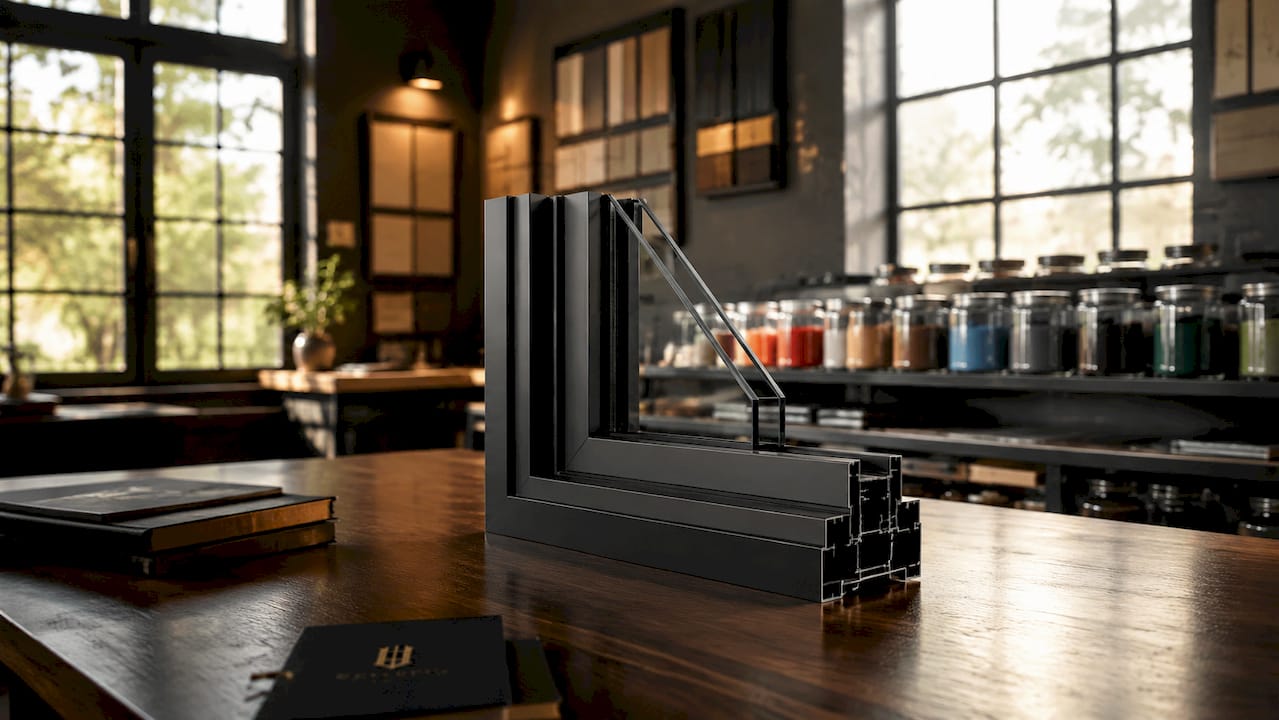
The resulting finish thickness ranges from 50 to 125 microns. That thickness matters because it determines how well the coating resists impact, UV exposure, and moisture penetration over time.
Pretreatment is the step most buyers never see but should ask about. Chemical immersion pretreatment ensures the powder bonds tightly to the aluminum surface, allowing the coating to flex without cracking as the metal expands and contracts with temperature changes. Without proper pretreatment, even a thick powder coat will peel within a few years.
Liquid paint, by contrast, is applied wet and dries through solvent evaporation. It does not form the same continuous molecular bond with the substrate. Powder coating produces a harder, more uniform shell that resists chipping, UV, and corrosion more effectively than conventional liquid paint systems.
- Electrostatic application bonds powder to the frame before curing begins
- Oven curing at ~200°C cross-links the polymer into a hard, continuous film
- 50–125 micron thickness provides the physical barrier against weather and impact
- Multi-stage pretreatment is the foundation of long-term adhesion and flexibility
Pro Tip: When evaluating suppliers, ask specifically about their pretreatment process. A manufacturer who cannot describe their chemical immersion steps is a manufacturer worth avoiding.
How do AAMA standards affect powder coat durability?
AAMA performance grades define exactly how much punishment a powder coat finish can take before it fails. Specifying the wrong grade for your environment is the single most common and costly mistake in window procurement.
AAMA 2603 is the residential entry-level grade, suitable for interior applications or low-exposure exterior use in mild climates. AAMA 2604 offers superior humidity and salt spray resistance, withstanding 3,000 hours of humidity testing and 1,500–3,000 hours of salt spray exposure. AAMA 2605 is the top-tier specification, designed for extreme UV and corrosion conditions, with a proven service life of up to 10 years under harsh outdoor conditions.
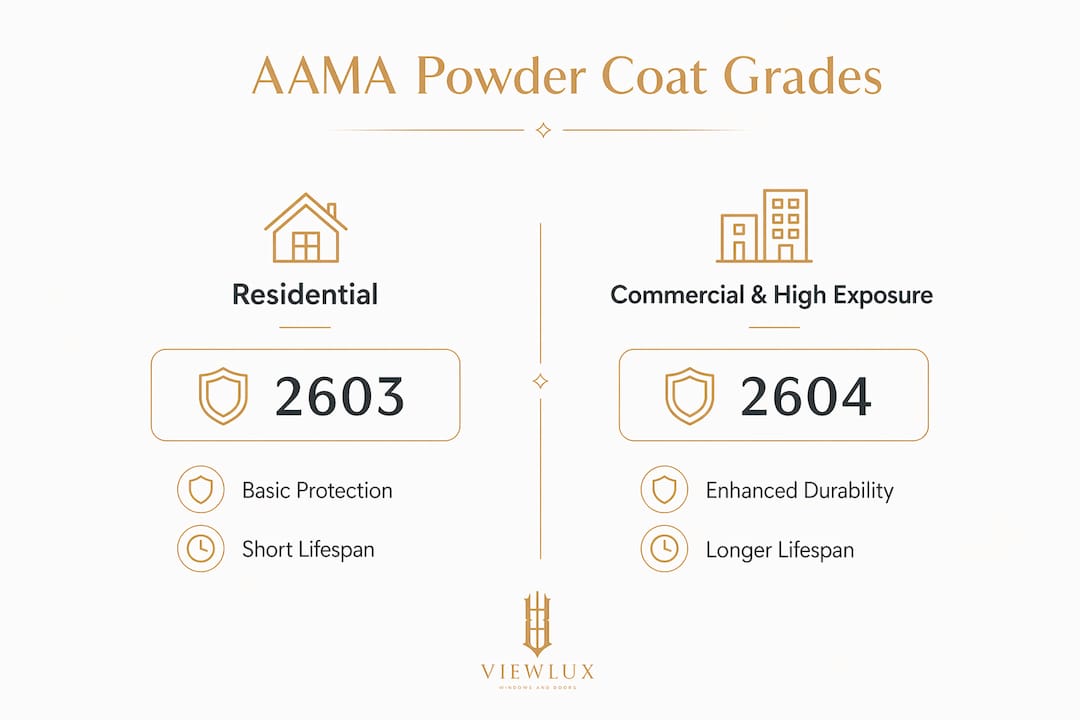
Using interior-grade AAMA 2603 in exterior environments causes coating failure within six months. That is not a theoretical risk. It is a documented outcome that results in fading, chalking, and delamination on frames that should last decades.
Pro Tip: For any exterior window in a coastal, industrial, or high-UV region, specify AAMA 2604 as the minimum. Reserve AAMA 2603 for interior frames or protected overhangs only.
| AAMA Standard | Performance Level | Typical Use Case | Salt Spray Resistance | Expected Lifespan |
|---|---|---|---|---|
| AAMA 2603 | Entry-level | Interior or mild exterior | Minimal | 1–3 years exterior |
| AAMA 2604 | Mid-grade | Residential exterior, moderate climates | 1,500–3,000 hours | 5–7 years exterior |
| AAMA 2605 | Premium | Commercial, coastal, high-UV regions | 4,000+ hours | Up to 10 years |
The cost difference between AAMA 2604 and 2605 certified powder coats is real but modest compared to the cost of recoating or replacing frames prematurely. Specifying correctly upfront is always the more economical decision.
How does your location affect finish selection?
Location is the most underweighted variable in finish selection. A powder coat that performs well in Denver will fail prematurely in a beachfront property in Malibu if the wrong grade is specified.
The distance from the ocean is the primary environmental variable for coastal projects. Here is how to apply it:
- Within 300 meters of the ocean: Standard powder coating is not sufficient. Anodized or duplex systems are required at this distance. Salt spray concentration at this range will degrade even AAMA 2604 finishes faster than acceptable.
- 300 meters to 1 kilometer from the ocean: AAMA 2604 powder coating is appropriate. The salt spray load drops significantly beyond 300 meters, making mid-grade powder coats viable for well-maintained frames.
- Beyond 1 kilometer from the ocean: AAMA 2603 is acceptable for sheltered or interior applications. Standard powder coating performs reliably at this distance in most climates.
- Industrial environments: Proximity to chemical plants, refineries, or heavy traffic corridors introduces airborne pollutants that accelerate coating degradation. Specify AAMA 2604 or 2605 regardless of ocean distance.
- High-UV regions (desert Southwest, high altitude): UV degradation is the primary threat in these climates. AAMA 2605 certified finishes with fluoropolymer-enhanced powders provide the best resistance in regions like Arizona, Nevada, and Colorado.
Humidity is a secondary but significant factor. High-humidity climates in the Southeast United States accelerate corrosion at any exposed substrate. Proper pretreatment and AAMA 2604 or higher certification are the right baseline for these regions.
Powder coating vs. anodizing: which finish is right for you?
Powder coating and anodizing are the two dominant aluminum window finish options, and they protect aluminum through fundamentally different mechanisms. Understanding the difference helps you choose the right finish for your project.
Anodizing is an electrochemical process that converts the aluminum surface itself into a hard aluminum oxide layer. The finish is integral to the metal, not applied on top of it. Powder coating applies a polymer film over the surface. Each approach has distinct strengths.
Powder coating offers broad color and texture choices including matte, gloss, metallic, and textured finishes that anodizing cannot replicate. Anodizing is limited to clear, bronze, champagne, and black tones. For architects and homeowners who want specific colors to match a design palette, powder coating is the clear choice.
Powder coating also offers easier field repair and wider color ranges compared to anodizing, making it the preferred specification in architectural exterior applications requiring uniform aesthetics across large facades.
| Finish Type | Color Options | Scratch Resistance | Corrosion Resistance | Best For |
|---|---|---|---|---|
| Powder Coating (AAMA 2604/2605) | Unlimited | High | High | Residential and commercial exterior |
| Anodizing | Limited (clear, bronze, black) | Very High | Very High | High-traffic, coastal within 300m |
| Duplex (Anodize + Powder Coat) | Unlimited | Highest | Highest | Extreme coastal and industrial |
| Liquid Paint | Unlimited | Low | Low | Interior only |
The duplex system combining anodizing with powder coating delivers over 30 years of protection in coastal environments. It costs approximately 40% more than single-finish systems, combining 15 microns of anodizing with 80 microns of powder coating. For beachfront properties or high-value commercial facades, that cost premium is justified by the service life extension.
How to maintain powder coated aluminum windows
Powder coated aluminum windows require minimal maintenance, but the maintenance they do require must be done correctly. The wrong cleaning method can damage the coating faster than weather exposure.
- Clean with mild soap and water applied with a soft cloth or sponge. This is the only recommended cleaning method for routine maintenance.
- Rinse thoroughly after cleaning to remove all soap residue, which can attract dirt and degrade the coating surface over time.
- Inspect annually for chips, scratches, or areas where the coating has thinned. Early detection allows for minor touch-ups before corrosion reaches the substrate.
- Avoid pressure washers. Harsh cleaning agents including pressure washers, vinegar, and acidic removers damage the powder coat and accelerate coating failure.
- Touch up minor chips with manufacturer-supplied touch-up paint matched to the original powder coat color. This prevents moisture from reaching the aluminum substrate at the damaged point.
Powder coating requires only mild soap and water for routine maintenance, which is one of its primary advantages over liquid paint systems that require periodic repainting. That low maintenance burden translates directly into lower lifecycle cost for the building owner.
Pro Tip: In coastal or high-humidity areas, increase cleaning frequency to every three months. Salt and humidity accumulate on frame surfaces faster than in dry climates, and regular cleaning removes corrosive deposits before they penetrate the coating.
Key takeaways
Specifying the correct AAMA grade for your environment is the single most important decision in selecting a powder coated aluminum window finish.
| Point | Details |
|---|---|
| Finish thickness matters | A 50–125 micron powder coat provides the physical barrier that liquid paint cannot match. |
| AAMA grade determines lifespan | AAMA 2605 lasts up to 10 years in harsh conditions; 2603 fails outdoors within months. |
| Location drives finish choice | Within 300 meters of the ocean, use anodized or duplex systems, not standard powder coat. |
| Color flexibility favors powder coat | Matte, gloss, metallic, and textured finishes are available in unlimited colors, unlike anodizing. |
| Maintenance is simple but specific | Mild soap and water only; pressure washers and acidic cleaners destroy the coating. |
What i have learned specifying powder coated windows
After working through dozens of residential and commercial window specifications, the pattern that stands out most is how often the AAMA grade conversation gets skipped entirely. Builders focus on color and price. The grade question comes up only after a finish fails.
My honest position: AAMA 2604 should be the default specification for any exterior aluminum window in the United States, full stop. The cost difference over 2603 is small. The performance difference is not. I have seen 2603-coated frames in moderate climates show chalking and color shift within three years. That is a warranty call, a client relationship problem, and a reputation issue that no builder wants.
The duplex system is worth the conversation on any coastal project within a kilometer of the water. The 40% cost premium sounds significant until you compare it to the cost of recoating or replacing frames at year five. Clients who understand the math almost always choose the duplex.
One more thing: pretreatment quality is invisible at purchase and critical to performance. Viewluxwindows uses a rigorous multi-stage production process precisely because the steps buyers cannot see are the ones that determine whether a finish lasts five years or twenty. Ask your supplier about their pretreatment process. The answer tells you everything about their quality standards.
— Liran
Why Viewluxwindows delivers on powder coat quality
Viewluxwindows offers powder coated aluminum windows built to AAMA and NFRC certification standards, with color options spanning matte, gloss, metallic, and textured finishes across a full range of architectural profiles. Their direct-to-consumer model saves clients up to 50% compared to traditional dealers, without compromising the 26-step production process that ensures proper pretreatment, consistent coating thickness, and long-term finish adhesion.

Whether you are specifying windows for a coastal California home, a high-altitude Colorado build, or a commercial project in Nevada, Viewluxwindows provides custom aluminum solutions with the finish performance your project demands. Explore the full product catalog to review available powder coat colors, AAMA grades, and frame configurations. Visit Viewluxwindows to request a consultation or locate the nearest showroom.
FAQ
What thickness should a powder coat finish be on aluminum windows?
A quality aluminum window powder coat finish measures 50–125 microns thick. Thinner applications reduce impact and UV resistance, while coatings within this range provide the durability required for exterior performance.
Which AAMA standard is best for exterior aluminum windows?
AAMA 2604 is the recommended minimum for exterior residential windows, and AAMA 2605 is required for commercial or high-exposure environments. Using AAMA 2603 on exterior frames in harsh climates causes failure within six months.
Can powder coated aluminum windows be used near the ocean?
Within 300 meters of the ocean, anodized or duplex systems are required. Between 300 meters and 1 kilometer, AAMA 2604 powder coating is appropriate with regular maintenance.
How do you clean powder coated aluminum window frames?
Clean with mild soap and water using a soft cloth. Avoid pressure washers, vinegar, and acidic cleaners, as these damage the coating and accelerate corrosion at the frame surface.
Does powder coating offer more color options than anodizing?
Powder coating provides unlimited color and texture choices including matte, gloss, metallic, and textured finishes. Anodizing is limited to clear, bronze, champagne, and black tones, making powder coating the preferred choice for architectural color matching.


