
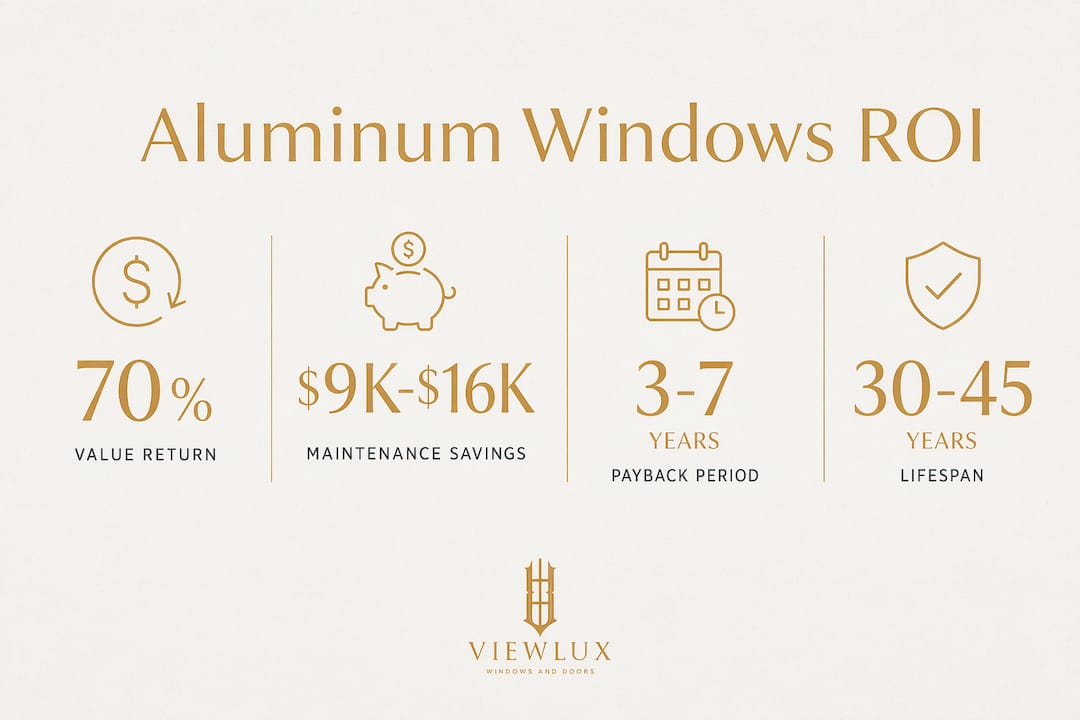
Aluminum windows ROI is defined as the combined financial return from property value uplift plus ongoing savings in energy and maintenance costs. Window replacement ROI generally ranges from 60% to 80%, with premium materials and quality installation pushing results toward the higher end. For aluminum specifically, high-quality units return 50–70% of installed cost in home value at sale, plus an additional 20–30% annual ROI from energy savings and maintenance reductions. Full cost recovery is often achieved within five years. Two technologies drive this performance: thermal break construction, which cuts heat loss significantly, and the material’s 30–45 year lifespan, which eliminates the replacement cycles that erode vinyl’s long-term value.
How do aluminum windows increase property value?
Aluminum windows add measurable value through two mechanisms: direct appraisal uplift and the removal of buyer objections at sale. Appraisers typically credit 50–70% of the installed window cost back to the property’s assessed value. On a 20-window installation costing $18,000, that translates to $9,000–$12,600 added to your appraised value before a single buyer walks through the door.
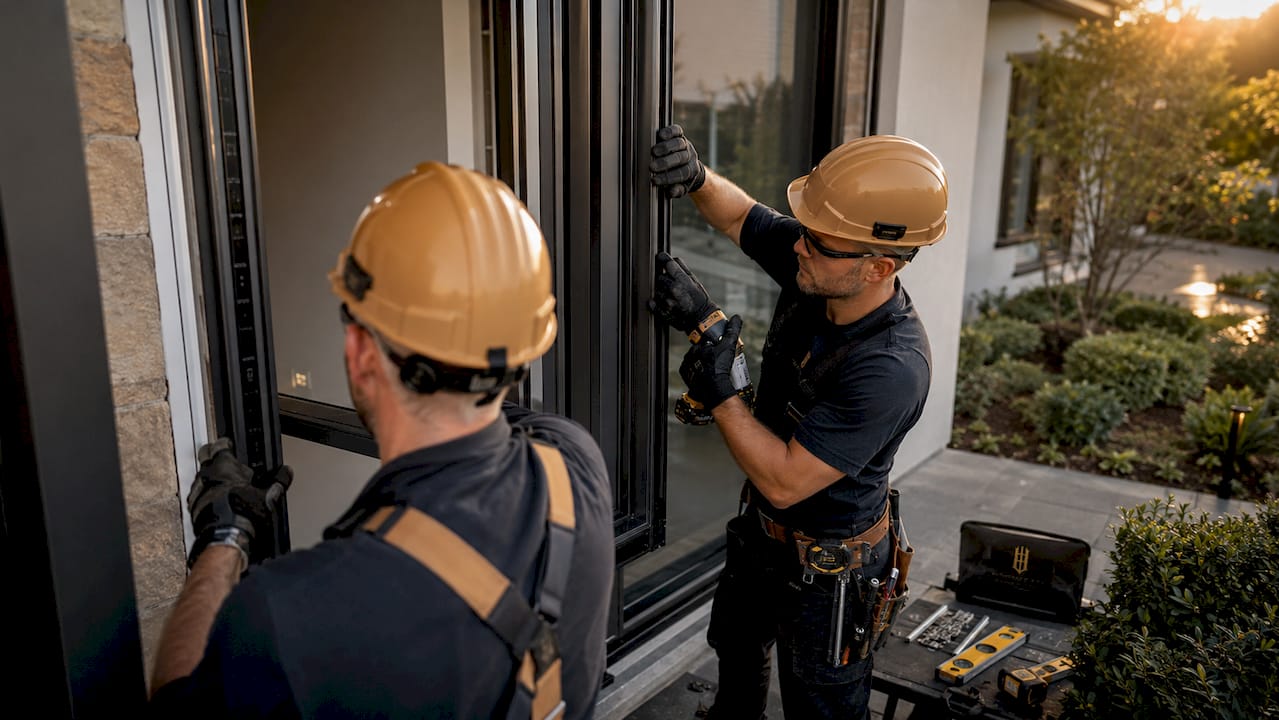
The less obvious gain is negotiation leverage. In premium markets, aluminum windows reduce negotiation price cuts by $3,000–$15,000 and speed sales by two to four weeks on average. Buyers in upscale segments treat aluminum windows as a baseline expectation, not a bonus. A home with dated or damaged windows invites lowball offers; aluminum windows remove that opening entirely.
Aluminum vs. vinyl: cost and resale value compared
The table below shows the core financial difference between aluminum and vinyl windows across a typical 20-unit residential installation.
| Factor | Aluminum windows | Vinyl windows |
|---|---|---|
| Installed cost per unit | $600–$1,200 | $450–$800 |
| Lifespan | 30–45 years | 15–25 years |
| Appraisal value return | 50–70% of cost | 40–55% of cost |
| Contractor gross margin | 35–40% | 30% |
| Premium market positioning | Standard expectation | Mid-market fit |
Aluminum windows last 30–45 years, outperforming vinyl in durability, especially in high-UV or coastal environments. That longevity means you replace vinyl windows twice before you replace aluminum once. The total cost of ownership calculation shifts decisively in aluminum’s favor over a 30-year horizon.
Pro Tip: When calculating aluminum window investment return for a sale, ask your appraiser to itemize window condition separately. Many appraisers bundle it into general condition, which understates the actual value contribution.
What energy savings contribute to aluminum windows ROI?
Thermal break technology is the primary driver of energy savings with aluminum windows. A thermal break is a polyamide strip inserted into the aluminum frame that interrupts the conductive path between the interior and exterior surfaces. Thermal break aluminum windows reduce household energy loss by 30–50%, with payback periods ranging from three to seven years depending on climate zone.
The quality of that polyamide strip matters more than brand name. A 24mm or wider thermal barrier is the industry standard for meaningful efficiency gains, improving U-value by 0.5–1.0 W/(m²·K). That improvement directly reduces heating and cooling load. For a typical 2,000-square-foot home, annual heating savings run $400–$600 depending on local energy rates.
The long-term value of aluminum windows also shows up in maintenance costs. Consider these annual cost advantages:
- No repainting required. Aluminum’s powder-coat finish holds color for decades without peeling or fading, unlike wood.
- No warping or swelling. Vinyl degrades in extreme heat; aluminum maintains dimensional stability across temperature ranges.
- Corrosion resistance. Aluminum forms a natural oxide layer that protects against moisture, reducing repair frequency in coastal climates.
- Hardware longevity. Aluminum frames support heavier glazing without frame flex, extending hardware life.
These maintenance savings compound over time. A homeowner who avoids one vinyl replacement cycle saves $9,000–$16,000 in today’s installed costs. That figure belongs in any honest aluminum windows cost efficiency calculation.
For readers who want to understand the glazing options that amplify these savings, pairing thermal break frames with low-E or triple-pane glass pushes U-values even lower and shortens payback periods further.
How does market context affect aluminum window performance and ROI?
Market context largely defines aluminum windows’ ROI. In upscale markets, aluminum is a standard expectation, and its absence depresses value. In mid-market homes, ROI is closer to that of uPVC or vinyl, because buyers in that segment do not price the premium in. Knowing your market segment before investing is the single most important variable in the ROI calculation.
Installation quality is the second critical variable. A thermally broken aluminum window installed with air gaps or improper flashing performs no better than a standard frame. Professional installation preserves both the energy performance and the warranty coverage that supports resale value.
Four factors most commonly reduce aluminum window ROI in practice:
- Choosing standard aluminum over thermal break frames. Standard aluminum conducts cold directly into the frame, creating condensation and heat loss that erodes energy savings.
- Ignoring regional energy costs. In low-cost energy markets, the payback period extends beyond seven years, reducing the energy component of ROI.
- Mismatching window style to architecture. Slim-profile aluminum systems command a premium in modern architectural contexts. Installing them in a traditional colonial-style home reduces the aesthetic premium buyers pay.
- Skipping NFRC certification verification. NFRC-certified windows carry independently verified performance ratings. Non-certified units may underperform their advertised specifications, reducing both energy savings and appraisal credibility.
Pro Tip: Before purchasing, verify that your aluminum windows carry both NFRC and AAMA certifications. These two standards confirm energy performance and structural integrity independently, which matters to appraisers and buyers alike.
Aluminum windows are viewed as a premium feature that enables higher pricing and appeals to buyers seeking modern aesthetics and durability. That perception is strongest in California, Colorado, and Nevada markets, where modern architecture and high property values amplify the ROI of premium window upgrades.
How do factory costs and retail pricing affect the ROI calculation?
The retail price of aluminum windows includes more than material cost. The factory cost difference between aluminum and vinyl is only $40–$60 per unit. Aluminum costs approximately $120 per unit to manufacture versus $80 for vinyl. At retail, the installed price is $900 for aluminum versus $625 for vinyl, a 44% premium. That gap is not raw material. It is distribution markup, contractor margin, and brand positioning.
Aluminum commands 35–40% gross contractor margins versus 30% for vinyl. On a 20-window job, that means aluminum generates $6,000–$9,000 in contractor profit versus $3,600–$5,000 for vinyl. Contractors price aluminum higher because the market accepts it, not because it costs proportionally more to produce.
| Cost component | Aluminum | Vinyl |
|---|---|---|
| Factory unit cost | ~$120 | ~$80 |
| Retail installed price | ~$900 | ~$625 |
| Retail premium over factory | ~650% | ~681% |
| Contractor gross margin | 35–40% | 30% |
This pricing structure has a direct implication for ROI. Buyers who purchase aluminum windows through traditional retail channels pay the full distribution and contractor markup. Direct-to-consumer manufacturers eliminate that markup layer, which lowers the investment basis and improves the ROI percentage from day one. A lower acquisition cost on the same quality product means the 50–70% appraisal return represents a higher percentage of actual cash spent.
Key takeaways
Aluminum windows deliver measurable ROI through property value gains, energy savings, and a lifespan that outlasts two vinyl replacement cycles.
| Point | Details |
|---|---|
| Property value return | Aluminum windows return 50–70% of installed cost in appraised home value at sale. |
| Energy savings payback | Thermal break frames cut energy loss by 30–50%, with payback in 3–7 years. |
| Lifespan advantage | Aluminum lasts 30–45 years, avoiding the replacement costs that reduce vinyl’s long-term value. |
| Market segment matters | Premium market buyers treat aluminum as a baseline expectation, amplifying negotiation leverage. |
| Direct purchase improves ROI | Buying factory-direct removes distribution markup, lowering the investment basis and raising the return percentage. |
Why I think most homeowners miscalculate aluminum window ROI
Most ROI discussions focus on the appraisal number and stop there. That misses the most financially significant part of the return: what happens at the negotiating table.
I have seen properties with dated windows lose $10,000–$20,000 in sale price not because the windows failed inspection, but because buyers used them as a psychological anchor for a broader discount. The seller conceded on price to avoid the perceived hassle. Aluminum windows eliminate that anchor. The real ROI in resale value includes eliminating buyer objections and speeding sales, which can sometimes outweigh direct appraisal increases.
For investors specifically, I would prioritize thermal break aluminum in any property targeting buyers above the median price point in California, Colorado, or Nevada. In those markets, the absence of premium windows is a liability, not a neutral condition. For mid-market properties, the ROI math is tighter, and the energy savings component carries more weight than the appraisal uplift.
One misconception I encounter regularly: people assume aluminum costs too much to pencil out. The factory-to-retail markup data tells a different story. The material itself is not the expensive part. Distribution and contractor margin are. Buying direct from a certified manufacturer changes the ROI calculation entirely, because you are working from a lower cost basis on the same certified product.
The other overlooked factor is certification. NFRC and AAMA certifications are not marketing labels. They are independently verified performance standards that appraisers and buyers recognize. A certified window with documented U-values is a stronger asset than an uncertified one, regardless of how it looks.
— Liran
How Viewluxwindows delivers aluminum window ROI directly to you
Viewluxwindows offers NFRC and AAMA certified aluminum windows through a direct-to-consumer model that removes the distribution markup described above. Clients save up to 50% compared to traditional dealer pricing, which directly lowers the investment basis and improves the ROI percentage from the first day of installation. Every unit goes through a 26-step production process, and the product warranty backs both performance and durability for the long term.
Viewluxwindows serves homeowners, architects, builders, and contractors across California, Colorado, and Nevada with custom aluminum solutions built for modern architectural designs. Browse the full product catalog or visit viewluxwindows.com to request a consultation and get a direct-to-consumer quote on your upgrade.
FAQ
What is the average ROI on aluminum window replacement?
Window replacement ROI ranges from 60% to 80%, with aluminum at the higher end due to premium positioning and durability. Full cost recovery typically occurs within five years when energy savings are included.
How long does it take to recoup the cost of aluminum windows?
Thermal break aluminum windows have payback periods of three to seven years depending on climate zone and local energy costs. Properties in high-energy-cost markets like California recover costs faster.
Do aluminum windows add more value than vinyl at resale?
Yes. Aluminum windows return 50–70% of installed cost in appraised value versus 40–55% for vinyl, and they carry stronger negotiation leverage in premium market segments. The lifespan advantage also eliminates one or two replacement cycles over a 30-year ownership period.
What makes thermal break aluminum windows more energy efficient?
The thermal break is a polyamide strip inside the aluminum frame that blocks heat transfer between interior and exterior surfaces. A strip width of 24mm or more meets the industry standard for meaningful U-value improvement, reducing heating and cooling costs by 30–50%.
Is aluminum worth the premium over vinyl for a mid-market property?
In mid-market properties, the ROI is closer to that of vinyl or uPVC because buyers in that segment do not price the premium in. The energy savings component still applies, but the appraisal and negotiation leverage benefits are strongest in properties priced above the local median.
Recommended
- Do Premium Windows Increase Property Value? – ViewLux Windows And Doors, Inc.
- Custom Aluminum Door Configurations Explained for Builders – ViewLux Windows And Doors, Inc.
- ViewLux Windows And Doors, Inc. – Infusing Interiors with Natural Light
- Energy Efficient Window Glazing Options for Homes – ViewLux Windows And Doors, Inc.


