
What are the main custom aluminum profile configuration options?
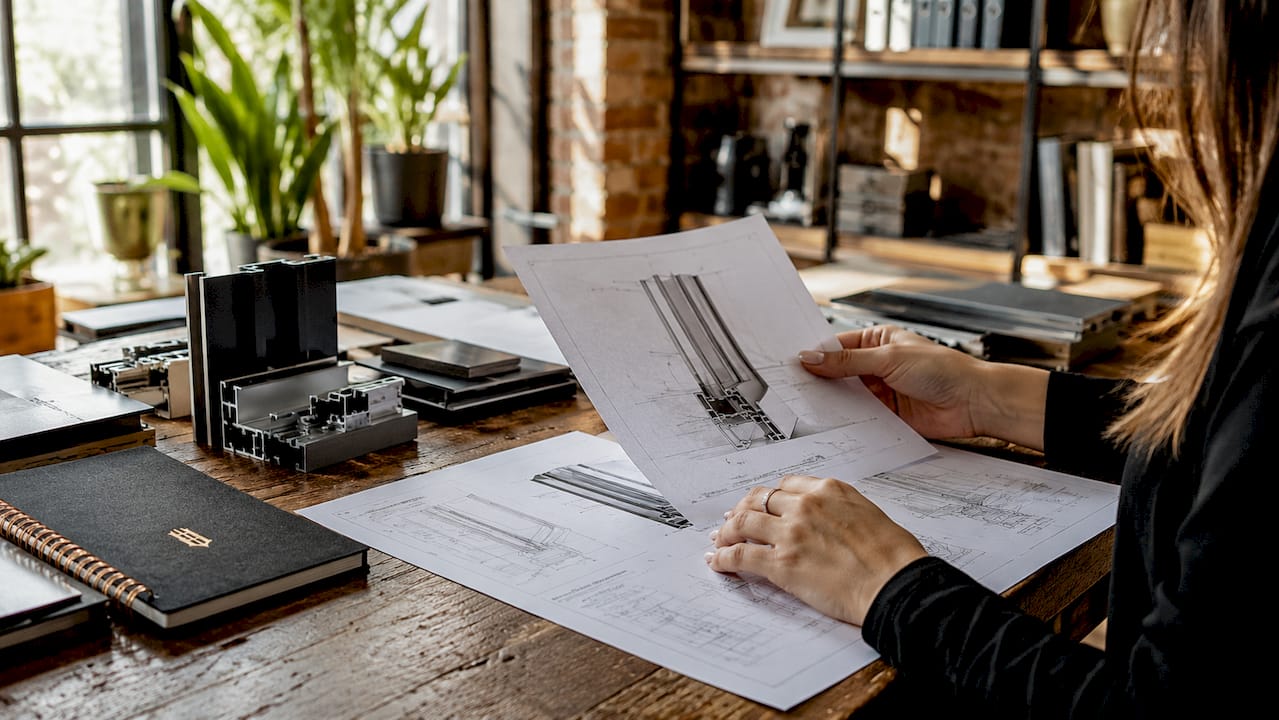
Custom aluminum profile configuration options give architects, builders, and DIY enthusiasts direct control over structural performance, dimensional fit, and surface aesthetics. The right configuration starts with three foundational decisions: alloy series, profile geometry, and finishing method.
Key configuration categories to understand upfront:
- Profile geometry types: Solid profiles (bars, angles, open channels) offer simpler die tooling and predictable metal flow. Hollow profiles (box beams, multi-chamber tubes) deliver high stiffness-to-weight efficiency and torsional resistance. Semi-hollow profiles such as C-channels and track systems suit sliding systems and modular frameworks.
- Alloy series: The 6xxx-series alloys — specifically 6060, 6063, 6061, and 6082 — are the architectural industry standard, balancing strength, corrosion resistance, and finish quality.
- Temper grades: T5 and T6 are the most common for architectural profiles. T5 offers good strength with moderate formability; T6 delivers higher strength at the cost of ductility.
- Finishing options: Mill finish, anodizing (Type II and Type III), powder coating, and wet painting each serve different durability and aesthetic requirements.
- Minimum order quantities (MOQs): Custom extrusions typically start at 1,000 lbs, though some suppliers accommodate orders as low as 500 lbs depending on complexity.
- Die tooling: Every new profile geometry requires a dedicated die. Profile complexity directly drives tooling cost and lead time.
Matching these variables to the project’s load conditions, environmental exposure, and assembly requirements is what separates a well-configured profile from an expensive redesign.
How to choose the right alloy and temper for your project
Alloy and temper selection determines whether a custom profile performs reliably over its service life or requires premature replacement. Getting this decision right early prevents costly material substitutions during production.
- 6063: The most widely specified architectural alloy. Produces complex profiles with excellent surface finish, ideal for anodizing and powder coating. Best suited for window frames, curtain walls, and decorative elements where appearance matters as much as load capacity.
- 6061: Higher tensile strength than 6063, making it the preferred choice for structural members, load-bearing frames, and hardware-intensive assemblies. Surface finish is slightly coarser, which matters when specifying anodized finishes.
- 6060: Similar to 6063 but with slightly lower strength. Widely used across European architectural systems and well-suited for intricate profile geometries requiring thin walls.
- 6082: The highest-strength option within the standard 6xxx range. Favored for heavy structural applications where section size must stay compact.
Temper grade works alongside alloy selection to define final mechanical properties, as explored in detail by Aluminium Yards – Regency Floats. T5 temper, achieved through air cooling after extrusion, suits profiles where moderate strength and good machinability are both required. T6 temper, which involves artificial aging after quenching, produces higher yield strength but reduces ductility and makes secondary machining more demanding. For window and door frame profiles that require post-extrusion drilling or tapping, T5 is often the more practical specification.
Environmental exposure also shapes the decision. Coastal and high-humidity projects benefit from 6063 or 6060 with anodized finishes, since these alloys respond more uniformly to the anodizing process. Inland structural applications with higher load demands typically call for 6061-T6. Specifying alloy and temper in the initial design brief, rather than leaving it to the fabricator, keeps tolerances and finish expectations aligned from the start.
Design considerations that prevent costly mistakes
Profile geometry is where most custom extrusion projects either succeed or fail before a single pound of aluminum is extruded. Design for Manufacturability (DFM) evaluates wall thickness balance, symmetry, hollow complexity, die accessibility, and downstream processing before any tooling investment is made.
Symmetry is the single most impactful design variable. Asymmetrical profiles create uneven pressure distribution inside the die, which causes warping, increases die correction costs, and reduces part straightness. When asymmetry is functionally unavoidable, adding ribs or thickening thinner walls to balance metal flow compensates for the geometry.
Wall thickness consistency matters nearly as much. The ratio of the thickest to thinnest wall section should ideally stay at or below 2:1. Sudden thickness changes cause uneven cooling rates, which introduce internal stress and dimensional instability. Internal corners require minimum radii of at least 0.5 to 1.0 times the wall thickness to prevent cracking during extrusion.
Hollow and semi-hollow profiles add structural efficiency but demand more complex dies. The tooling investment is justified when the application genuinely requires torsional rigidity, cable routing, or enclosed structural space. Adding hollow chambers purely for aesthetics increases tooling cost and production risk without a corresponding performance benefit.
Pro Tip: Engage your extruder before finalizing the CAD drawing. A manufacturability review at the concept stage can eliminate die correction cycles and avoid expensive scrap runs after trial extrusion.
What the production process looks like from design to delivery
Understanding the production sequence helps architects and builders set realistic project timelines and budget for tooling costs accurately.
- Design documentation: Fabricators need CAD files in DXF, STEP, or PDF format, along with application details covering load conditions, environmental exposure, required tolerances, and expected order volume. A sketch with clear dimensions is enough to begin a feasibility review.
- Die development: Each new profile geometry requires a custom die machined to exact specifications. Die complexity, profile size, and alloy choice all influence tooling cost. Reusing or adapting an existing die from a fabricator’s catalog of thousands of profiles can save both time and tooling expense when the geometry is close enough to an existing shape.
- Minimum order quantities: Most suppliers set MOQs starting at 1,000 lbs, with some accommodating orders as low as 500 lbs. Background production data indicates minimum run sizes often begin around 250–300 kg per production run, which helps amortize die costs effectively.
- Lead times: Die manufacture typically adds several weeks to the production schedule before extrusion begins. Projects with tight timelines benefit from early supplier engagement and, where possible, from specifying profiles that can use existing tooling.
- Post-extrusion services: Cutting to length, drilling, tapping, punching, deburring, and mechanical brushing are commonly available as value-added operations. Receiving parts assembly-ready reduces on-site labor and minimizes handling errors.
- Prototyping: 3D-printed profile samples allow builders and architects to validate geometry, clearances, and interface fit before committing to die manufacture. This step is especially useful when the profile integrates with multiple components or installation tolerances are tight.
Finishing options and what each one delivers
Surface finish affects corrosion resistance, dimensional tolerances, and long-term appearance. Choosing the right finish at the design stage, rather than specifying it after tooling is cut, prevents assembly problems and rework.
- Mill finish: The as-extruded surface with no additional treatment. Lowest cost and fastest lead time. Suitable for concealed structural members where appearance is not a factor.
- Clear anodizing (Type II): An electrochemical process that builds a hard aluminum oxide layer, typically 10–25 microns thick. Provides good corrosion resistance and a clean, metallic appearance. Works best on 6063 and 6060 alloys, which produce more uniform color.
- Hard coat anodizing (Type III): Produces a thicker, harder oxide layer for applications requiring abrasion resistance. Common in high-traffic commercial installations.
- Powder coating: Applied electrostatically and cured under heat. Powder coating thickness ranges from 60–120 microns, which must be factored into tolerances for hinges, clip joints, and tight-fit assemblies. Offers the widest color range and strong UV resistance. Viewluxwindows provides a detailed breakdown of powder coat finish options for architectural aluminum applications.
- Wet painting: Used when specific RAL or custom colors are required and powder coating cannot achieve the target appearance. Higher VOC considerations apply.
- Mechanical finishes: Brushing and polishing create satin or mirror textures. These are mechanical processes, not chemical ones, and produce a different look and cost profile than anodizing.
Finishes meeting AAMA and NFRC standards provide verified performance benchmarks for architectural applications, particularly for window and door assemblies subject to weather exposure and energy code compliance.
Where custom aluminum profiles are used in building projects
Custom profiles appear across nearly every category of residential and commercial construction, often replacing assemblies of multiple standard parts with a single engineered extrusion.
- Window and door frames: Tailored profiles accommodate specific glazing bead dimensions, weather seal grooves, and drainage channels in a single extrusion. This reduces part count and improves airtightness. Builders specifying luxury aluminum windows for modern homes rely on custom profiles to meet both aesthetic and thermal performance targets.
- Structural frames and supports: Custom hollow and semi-hollow profiles optimize the moment of inertia for specific span and load conditions, reducing material weight without sacrificing stiffness.
- Sliding and modular systems: Semi-hollow track profiles with integrated retention features and guide rails support sliding door systems, curtain wall assemblies, and modular partition frameworks.
- Facade elements: Decorative fins, reveals, and cladding clips extruded with mounting features built in reduce installation labor and eliminate the need for separate fastener hardware.
- Thermal management profiles: Profiles designed around fin spacing and airflow path are used in building envelope systems where heat transfer must be controlled. Thermal break designs incorporate low-conductivity inserts within hollow chambers to meet energy code requirements.
- Joining and assembly integration: Integrating channels, grooves, and mounting features into a single extrusion reduces part count, simplifies assembly, and eliminates potential failure points compared to using multiple standard components.
Aluminum’s recyclability is increasingly relevant under current building codes and LEED certification frameworks. Aluminum can be recycled repeatedly without loss of mechanical properties, and recycled content profiles are available from most major extruders for projects requiring documented sustainability credentials.
Viewluxwindows: certified quality and direct-to-consumer value
Viewluxwindows brings NFRC and AAMA certifications to every custom aluminum window and door profile, backing performance claims with independently verified standards for energy efficiency and durability. The 26-step production process combines precision tooling with skilled craftsmanship to deliver consistent dimensional accuracy and finish quality across every run.
Key advantages for architects, builders, and contractors:
- Direct-to-consumer pricing: Viewluxwindows sells factory direct, saving clients up to 50% compared to traditional dealer pricing on equivalent certified products.
- NFRC and AAMA certifications: Products meet verified standards for thermal performance, weather resistance, and structural integrity, supporting energy code compliance on residential and commercial projects.
- 26-step production process: Each profile passes through a documented quality sequence covering extrusion, finishing, glazing, and final inspection before shipment.
- Customizable configurations: The Viewluxwindows product catalog covers a range of aluminum window and door profiles with multiple finish and configuration options suited to luxury and contemporary architectural designs.
- Showroom access: Physical showrooms in California, Colorado, and Nevada allow architects and builders to review profile samples, finishes, and hardware configurations before specifying.
- Design collaboration: Viewluxwindows supports early-stage design reviews, helping builders and architects align profile specifications with production capabilities before committing to final drawings.
Viewluxwindows delivers custom aluminum profiles without dealer markups
Architects and builders who have worked through the configuration decisions covered in this guide, alloy selection, geometry, finish, and tolerances, need a manufacturing partner who can execute those specifications at a price that reflects actual production cost, not a distribution chain.
Viewluxwindows supplies certified custom aluminum window and door profiles directly from the factory, cutting out the dealer margin that typically adds 30–50% to the final cost. NFRC and AAMA certifications are standard, not optional upgrades, so energy code compliance is built into every profile from the start. Whether the project calls for custom door configurations for a commercial build or upscale residential window packages for a luxury home, Viewluxwindows has the production depth and certified quality to deliver. Request a quote or visit a showroom in California, Colorado, or Nevada to review profile samples and finishes in person.
Key Takeaways
Custom aluminum profile configuration options require early decisions on alloy, geometry, temper, and finish to control cost, performance, and lead time across the full production cycle.
| Point | Details |
|---|---|
| Alloy drives performance and finish | 6063 excels in surface quality; 6061 suits structural loads; specify both alloy and temper before tooling begins. |
| Symmetry reduces tooling risk | Asymmetrical profiles increase die correction costs and warping; balance metal flow through design, not post-production fixes. |
| Powder coat adds 60–120 microns | Account for coating thickness in tolerance specs for hinges, clips, and tight-fit assemblies. |
| MOQs start at 500–1,000 lbs | Custom extrusion runs typically require 1,000 lbs minimum, with some suppliers accommodating 500 lbs for simpler profiles. |
| Viewluxwindows cuts cost by up to 50% | Direct-to-consumer supply with NFRC and AAMA certifications delivers certified quality without dealer markups. |


