
Custom windows are defined as made-to-order units built to non-standard dimensions, shapes, or material specifications, and they cost significantly more than stock alternatives. The custom vs standard windows cost difference is substantial: standard replacement windows average $477 per unit, while custom replacements average $1,300–$1,500 per window. That gap reflects manufacturing complexity, specialized installation, and longer lead times, not just material upgrades. Homeowners and builders who understand all three cost drivers make better budgeting decisions and avoid expensive surprises mid-project.
What drives the unit cost difference between custom and standard windows?
Standard windows are mass-produced in fixed sizes, which keeps manufacturing costs low. Factories run the same dimensions repeatedly, reducing material waste and labor per unit. That efficiency passes directly to the buyer.
Custom windows work differently. Each unit is built to a specific size, shape, or configuration, which means separate tooling setups, individual quality checks, and more skilled labor per window. Custom windows cost 30–50% more than stock windows on average, and that premium grows with complexity. An arched window or a floor-to-ceiling fixed panel can push costs well above the standard range.
Material selection adds another layer to custom window pricing. Aluminum frames, thermally broken profiles, and specialty glazing all carry higher base costs than vinyl or basic double-pane glass. Energy-efficient glazing options such as low-emissivity coatings, triple glazing, or argon-filled units add to both custom and standard window costs, but they appear far more often in custom configurations because buyers ordering custom units tend to specify performance upgrades at the same time.
- Frame material: Aluminum and fiberglass frames cost more than vinyl but offer greater longevity and design flexibility.
- Glass specification: Low-E coatings, gas fills, and laminated safety glass each add to the unit price.
- Shape and size: Non-rectangular profiles require custom extrusions and more fabrication time.
- Finish options: Powder coat colors and anodized finishes add cost but extend service life significantly.
Pro Tip: Request an itemized quote that separates frame cost, glass cost, and finish cost. That breakdown shows exactly where the premium is coming from and where you can adjust without compromising performance.
How do lead times affect total project costs?
Lead times create a cost impact that most homeowners never factor into their initial budget. Stock windows ship in 2–6 weeks, while custom units typically require 4–16 weeks from order to delivery. That difference directly affects labor scheduling, site management, and weather exposure risk.

A contractor who frames an opening and then waits 12 weeks for a custom window faces real costs. The site may need temporary weatherproofing. Subcontractors scheduled around the window installation may need to reschedule, which adds fees. In some cases, delays push work into a different season, changing labor availability and rates entirely. Lead times for custom windows require early ordering to avoid these cascading project delays.
The practical steps for managing lead time costs are straightforward:
- Order custom windows before breaking ground. Place the order as soon as dimensions are confirmed, not after framing is complete.
- Build lead time into the project schedule. Add a buffer of at least two weeks beyond the supplier’s stated lead time.
- Confirm delivery dates in writing. Get a written commitment from the supplier and align your contractor’s schedule to that date.
- Plan temporary weatherproofing. Budget for house wrap or plywood covers if the opening will sit exposed during the wait.
- Coordinate inspections around delivery. Some municipalities require window installation before certain inspection stages, so schedule accordingly.
Pro Tip: For large projects with multiple custom units, stagger your orders by window type rather than ordering everything at once. This spreads delivery risk and keeps installation crews moving.
Does remodeling to fit standard windows cost more than going custom?
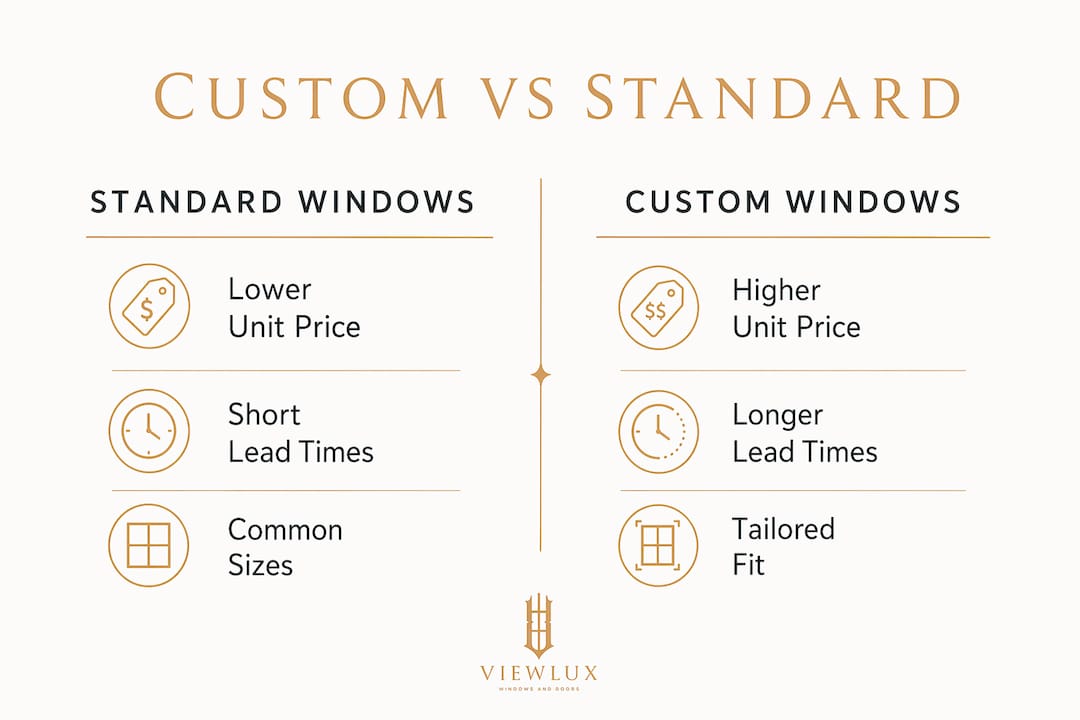
Forcing a standard window into an existing opening is not always the cheaper path. When the rough opening does not match a stock size, the contractor must resize the framing, adjust the masonry or siding, and refit the trim. Fitting stock windows often requires costly remodeling of masonry, siding, or trim, and those remodeling costs can exceed the price premium of a custom unit.
The total project cost comparison looks different once all line items are on the table:
| Cost category | Standard window path | Custom window path |
|---|---|---|
| Unit price | Lower ($477 average) | Higher ($1,300–$1,500 average) |
| Framing adjustment | Often required | Rarely required |
| Masonry or siding work | Possible additional cost | Typically not needed |
| Labor complexity | Lower for standard installs | Higher for oversized or shaped units |
| Permits and disposal | Similar for both paths | Similar for both paths |
The table shows why comparing only unit prices misleads homeowners. A $477 standard window that requires $800 in framing and masonry work costs more in total than a $1,300 custom unit that drops directly into the existing opening.
Labor accounts for roughly one-third of total window replacement costs. Custom windows push that share higher because installers need more time and, for oversized units, specialized handling equipment. Custom and oversized windows increase project costs because installers need specialized handling equipment and more labor time. Homeowners should request detailed quotes that separate labor, unit cost, framing work, and any permit or disposal fees before comparing the two paths.
Key cost categories to request in any window quote:
- Unit price per window
- Labor for removal and installation
- Framing, masonry, or siding modifications
- Permit fees
- Debris disposal
- Any equipment rental for large or heavy units
When are custom windows worth the extra cost?
Custom windows deliver clear value in specific situations. The decision is not about preference. It is about whether the project conditions make custom units the more cost-effective choice over the full project lifecycle.
Custom windows are the better financial decision when:
- The opening is non-standard. Older homes, historic renovations, and modern architectural designs frequently have openings that no stock size matches without significant modification.
- Energy performance is a priority. Custom units can be specified with NFRC-certified glazing packages and thermally broken frames that stock windows in the same price range cannot match. Better thermal performance reduces heating and cooling costs over the window’s service life.
- Design continuity matters. Builders working on high-end residential projects need windows that align with the architectural language of the structure. Stock sizes often force compromises that affect the finished appearance.
- Long-term durability reduces replacement cycles. A well-specified custom aluminum window with AAMA-certified performance ratings can outlast multiple cycles of lower-cost stock replacements.
- The opening is large or structurally complex. Floor-to-ceiling glazing, corner windows, and curtain wall sections require custom fabrication regardless of budget preference.
The trade-off is real. Custom windows require a larger upfront investment and a longer wait. But for homeowners planning to stay in a property for ten or more years, the combination of lower maintenance, better energy performance, and avoided remodeling costs often makes the math work in favor of custom. Reviewing an aluminum window cost comparison across manufacturers helps clarify where the price premium actually goes and whether it aligns with the project’s performance goals.
Standard windows remain the right choice for straightforward replacements in homes with openings that match common stock dimensions. When the fit is clean and the performance requirements are basic, the lower unit cost and faster delivery of stock windows are genuine advantages.
Key takeaways
The custom vs standard windows cost difference is not just a unit price gap. It is a total project cost calculation that includes remodeling, labor, lead times, and long-term performance.
| Point | Details |
|---|---|
| Unit price gap is significant | Custom windows average $1,300–$1,500 per unit versus $477 for standard replacements. |
| Remodeling can close the gap | Framing and masonry work to fit stock windows can exceed the custom price premium. |
| Lead times add hidden costs | Custom windows require 4–16 weeks, creating scheduling and labor cost risks. |
| Labor share rises with complexity | Custom and oversized units push labor beyond the standard one-third cost share. |
| Custom units suit specific conditions | Non-standard openings, energy goals, and design requirements favor custom windows. |
My take on the custom vs standard window decision
I have seen homeowners make the same mistake repeatedly. They compare window prices on a spreadsheet, choose the lower number, and then watch the total project cost climb past the custom option they passed on. The unit price is the least reliable number in a window replacement budget.
The more useful question is: what does the opening actually require? If the answer is framing work, masonry cuts, or siding adjustments, the standard window is not the cheap option. It just looks that way until the contractor’s full quote arrives.
One thing I consistently recommend is getting the installer and the window supplier in the same conversation before finalizing the window type. Installers know immediately whether a stock size will fit cleanly or require modification. That conversation takes 20 minutes and can redirect thousands of dollars in the budget.
Mixing window types across a project is also underused. A homeowner can specify custom units for the architecturally prominent elevations and use stock windows on secondary facades where fit and performance requirements are simpler. That approach captures the design and performance benefits of custom where they matter most, while keeping the overall budget in check.
Finally, the lead time issue deserves more attention than it gets. Ordering custom windows after framing is complete is a budget risk. Ordering them at permit submission, or even earlier on complex projects, is the move that keeps projects on schedule and avoids the labor costs that come with waiting.
— Liran
Viewluxwindows: custom and standard window options for every project
Viewluxwindows offers direct-to-consumer pricing on both custom and standard aluminum window configurations, with NFRC and AAMA certifications across the product line. By selling directly rather than through traditional dealers, Viewluxwindows passes savings of up to 50% to homeowners, architects, and builders without reducing specification quality.
Every Viewluxwindows product goes through a 26-step production process, covering thermal performance, airtightness, and finish durability. Homeowners and builders can review the full range of configurations in the Viewluxwindows product catalog, including fixed, sliding, and specialty units built to modern architectural standards. For projects where glazing performance drives the cost decision, the glazing options guide breaks down the performance and pricing impact of each specification. Showrooms are available across California, Colorado, and Nevada for in-person consultation.
FAQ
How much more do custom windows cost than standard ones?
Custom windows average $1,300–$1,500 per unit, compared to $477 for standard replacements. The premium reflects bespoke sizing, material specifications, and more complex installation requirements.
What is the typical lead time for custom versus standard windows?
Stock windows ship in 2–6 weeks, while custom windows require 4–16 weeks. That gap affects contractor scheduling and can add indirect costs to the total project budget.
Can fitting a standard window cost more than buying a custom one?
Yes. When the existing opening requires framing, masonry, or siding modifications to accept a stock size, total remodeling costs can exceed the price premium of a custom unit that fits the opening directly.
How much of the total window cost is labor?
Labor accounts for roughly one-third of standard window replacement costs. Custom and oversized windows push that share higher due to specialized handling and longer installation time.
When does it make financial sense to choose custom windows?
Custom windows make financial sense when the opening is non-standard, energy performance requirements are high, or remodeling costs to fit a stock unit would close the price gap. Long-term durability and avoided replacement cycles also improve the cost-benefit calculation over time.
Recommended
- Aluminum Window Cost Comparison: Manufacturers Ranked – ViewLux Windows And Doors, Inc.
- Retrofit vs. New Construction Window Frames: 2026 Guide – ViewLux Windows And Doors, Inc.
- Aluminum Windows ROI Explained for Homeowners in 2026 – ViewLux Windows And Doors, Inc.
- Do Premium Windows Increase Property Value? – ViewLux Windows And Doors, Inc.


