
Premium windows increase property value by delivering measurable returns at resale, reducing energy costs, and strengthening buyer appeal across every market segment. Homeowners who replace aging windows with high-performance alternatives recoup 65%–75% of costs at resale. For real estate investors, the math extends further: $800 per year in energy savings on a $500,000 property adds roughly $10,000 in value using a standard 8% capitalization rate. The industry term for this calculation is “income approach valuation,” and it is the framework appraisers and investors use to quantify the financial impact of window upgrades beyond simple resale comparisons.
How do premium windows increase property value vs. standard replacements?
Premium window upgrades outperform standard replacements on three measurable fronts: whole-home value lift, energy performance, and market speed. A comprehensive whole-home upgrade can yield a 7%–11% increase in total property value. That figure reflects improvements to natural light, noise isolation, thermal comfort, and perceived quality across every room.
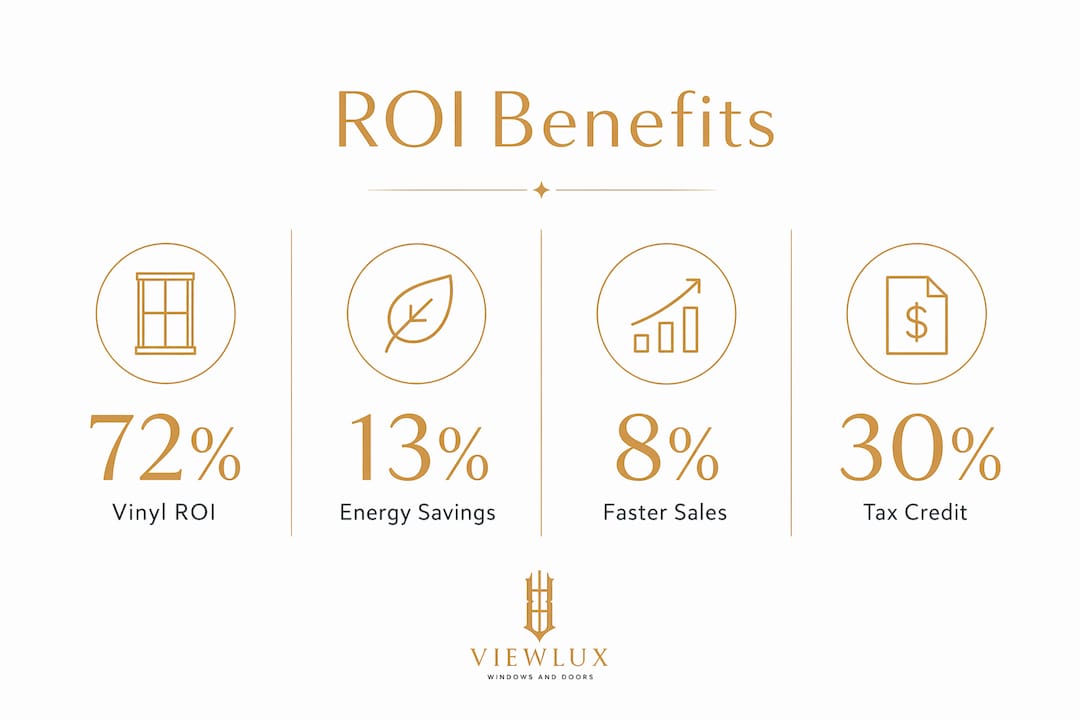
Homes with updated windows sell about 8% faster than comparable homes with outdated windows. Faster sales reduce carrying costs such as mortgage payments and utilities during the listing period, which matters especially to investors managing multiple properties.
Material choice shapes both the dollar value added and the ROI percentage. The table below compares the three most common premium window materials:
| Material | Typical ROI % | Best Use Case | Upfront Cost |
|---|---|---|---|
| Vinyl | 67%–72% | Most residential markets | Low to moderate |
| Fiberglass | 65%–70% | High-performance climates | Moderate to high |
| Wood | Lower % but higher dollar value | Historic and luxury properties | High |
Vinyl windows deliver the strongest ROI percentage for most homeowners because of broad buyer appeal and lower upfront cost. Wood windows add more absolute dollar value but carry higher costs and slightly lower percentage returns. They perform best in historic districts or luxury segments where architectural authenticity commands a premium.
Key advantages premium windows hold over standard replacements include:
- Certified energy performance: NFRC-rated windows provide verified U-factor and Solar Heat Gain Coefficient (SHGC) data that appraisers and buyers can verify.
- Noise reduction: Multi-pane glazing with gas fills reduces exterior noise, a measurable comfort factor in urban and suburban markets.
- Reduced inspection risk: Failing seals, rotted frames, and fogged glass are common inspection flags. New premium windows eliminate these issues before listing.
- Curb appeal: Frame profiles, glass clarity, and hardware finish contribute directly to first impressions and perceived home quality.
Pro Tip: Replace windows in visible street-facing rooms first. Buyers and appraisers form value judgments within seconds of approaching a property, so front-facing upgrades deliver the highest perception-to-cost ratio.
What factors influence the ROI of premium window upgrades?
The true financial return on window upgrades combines resale value increases, ongoing energy savings, avoided maintenance costs, and improved comfort. No single factor tells the full story.
The condition of your existing windows is the most important variable. ROI is strongest when replacing windows that are visibly aged, fogged, or structurally failing rather than windows that are merely cosmetically dated. Buyers and inspectors notice deterioration. Replacing failing windows removes a negotiation liability and prevents price reductions at closing.
Climate and local insurance rules also shape the return. In northern states, thermal performance ratings directly reduce heating bills. In Florida, Texas, and coastal markets, impact-rated windows can lower homeowner’s insurance premiums. Those annual savings compound over time and factor into appraisal calculations.
Additional factors that affect your specific ROI include:
- Architectural compatibility: A window style that conflicts with the home’s design reduces perceived quality regardless of material cost.
- Installation quality: Poor installation can cost thousands in repairs and negate ROI benefits entirely.
- Market segment: Premium windows carry more weight in mid-to-upper price brackets where buyers expect high-performance finishes.
- Triple pane vs. double pane: Triple pane windows are cost-effective mostly in extreme cold climates. In milder regions, the added cost rarely pays back within a typical ownership period.
Pro Tip: Get a blower door test before and after installation. This measures actual air leakage reduction and gives you a documented performance improvement you can share with appraisers and buyers.
How to choose premium windows that maximize property value
Selecting the right window starts with matching performance specifications to your climate zone and architectural style. Energy Star certification is the baseline standard. Low-E (low-emissivity) glass coatings reduce heat transfer without blocking visible light, and they are available across vinyl, fiberglass, aluminum, and wood frame options.
The numbered steps below provide a practical selection framework:
- Identify your climate zone. The U.S. Department of Energy divides the country into zones 1–7. Your zone determines the optimal U-factor and SHGC ratings for maximum energy savings.
- Match frame material to your home’s style and market. Vinyl suits most suburban homes. Aluminum frames, including the custom profiles offered by Viewluxwindows, suit modern and contemporary architecture where slim sightlines and large glass areas are priorities.
- Verify certifications. Look for NFRC labels for energy performance and AAMA certification for structural and weather resistance. These are the two standards appraisers and home inspectors reference.
- Assess warranty terms. A lifetime warranty on frames and a 20-year warranty on sealed glass units signals product confidence and protects your investment.
- Compare installed cost, not product cost. Installation labor, flashing materials, and trim work add 30%–50% to the product price. Get full project quotes from at least two qualified contractors.
The table below maps window styles to common use cases:
| Window Style | Best Application | Key Benefit |
|---|---|---|
| Sliding window | Living rooms, bedrooms | Easy operation, wide glass area |
| Panoramic sliding | Open-plan living, indoor-outdoor spaces | Expansive views, architectural impact |
| Awning | Bathrooms, kitchens | Ventilation with weather protection |
| Heavy-duty sliding | Large openings, commercial-grade residential | Structural strength, thermal performance |
| Casement | Bedrooms, studies | Maximum ventilation, tight seal when closed |
What are the installation best practices for premium windows?
Correct installation determines whether your premium windows perform as specified or fail within years. Inadequate flashing and air sealing are the leading causes of long-term window failure, water intrusion, and mold growth. These failures are expensive to remediate and directly reduce property value.
The critical installation requirements are:
- Flashing: A continuous waterproof barrier must wrap the rough opening before the window is set. Pan flashing at the sill is non-negotiable in any climate.
- Air sealing: Low-expansion spray foam or backer rod with sealant fills the gap between the window frame and the rough opening. This step directly affects the window’s tested air infiltration rating.
- Moisture barrier integration: The window flashing must lap correctly over the wall’s water-resistive barrier (WRB) to direct any water that enters back to the exterior.
- Shimming and leveling: An unlevel window binds, fails to seal properly, and stresses the frame over time.
“The window is only as good as its installation. A $3,000 premium window installed incorrectly will underperform a $900 standard window installed correctly.” This is the standard position held by AAMA-certified installation professionals.
When hiring an installer, verify AAMA or InstallationMasters certification. Ask for references from projects completed in the past 24 months. Confirm that the installer pulls the required building permits, as unpermitted window work creates title and appraisal complications at resale.
Pro Tip: Request a written installation checklist from your contractor before work begins. Any qualified installer will have one. If they cannot produce it, that is a reliable signal to keep looking.
How do regional market factors affect window upgrade ROI?
Market location shapes which premium window features deliver the strongest return. A triple-pane window optimized for Minnesota winters adds minimal value in Phoenix. An impact-rated window in Miami can reduce insurance premiums by hundreds of dollars annually.
Regional considerations by market type:
- Cold climates (Zones 5–7): Prioritize low U-factor ratings (0.25 or below) and argon or krypton gas fills. Heating cost reductions are significant and directly affect appraisal income calculations.
- Hot climates (Zones 1–3): Prioritize low SHGC ratings to reduce solar heat gain. This reduces cooling loads and lowers utility bills year-round.
- Hurricane and coastal zones: Impact-rated windows meeting Miami-Dade County Notice of Acceptance (NOA) standards are often required by code and qualify for insurance discounts.
- High-value urban markets (California, Colorado, Nevada): Buyers in these markets expect aluminum-framed, large-format windows as a design standard. Viewluxwindows operates showrooms across California, Colorado, and Nevada specifically to serve these buyer expectations.
The 2026 IRS Energy Efficient Home Improvement Credit (Section 25C) offers a 30% tax credit on qualifying windows, up to $600 per year. When stacked with average energy savings of 13%, this credit meaningfully reduces the effective upfront cost of an upgrade.
| Region | Priority Feature | Financial Benefit |
|---|---|---|
| Northeast / Midwest | Low U-factor, triple pane | Reduced heating costs |
| Southeast / Southwest | Low SHGC, impact rating | Lower cooling costs, insurance savings |
| Coastal / Hurricane zones | Impact-rated, NOA-certified | Insurance premium reductions |
| Western urban markets | Aluminum frames, large format | Buyer appeal, appraisal uplift |
Key takeaways
Premium windows increase property value most reliably when the right material, style, and installation quality align with local market expectations and climate requirements.
| Point | Details |
|---|---|
| Moderate but real ROI | Expect to recoup 65%–75% of window replacement costs at resale, not 100%. |
| Whole-home value lift | A full-home premium upgrade can raise total property value by 7%–11%. |
| Installation quality is critical | Poor flashing and air sealing negate energy and durability benefits and create costly repairs. |
| Material choice matters | Vinyl delivers the strongest ROI percentage; wood suits luxury and historic markets. |
| Regional factors shape returns | Climate zone, insurance rules, and local buyer preferences determine which features pay back most. |
Why i think most homeowners underestimate the full return on window upgrades
Most articles frame window ROI as a simple resale math problem. Spend $15,000, get $10,000 back at closing. That framing misses most of the actual return.
In my experience, the homeowners and investors who get the most from premium window upgrades are the ones who account for the full picture: energy savings compounding over 10–15 years, avoided maintenance on rotting wood or failed seals, insurance reductions in coastal markets, and the very real effect that clean, well-fitted windows have on how quickly a property sells and at what price.
The inspection angle is one I find consistently undervalued. Failing windows are one of the most common items flagged in home inspections. Each flag gives a buyer leverage to negotiate price down or request credits. Replacing deteriorated windows before listing removes that leverage entirely. That is not a soft benefit. It is a direct protection of your asking price.
I also think the material conversation gets oversimplified. Vinyl is the right call for most residential projects, and the data supports that. But for a modern architectural home in a California or Colorado market, aluminum frames with large glass areas are what buyers expect. Putting vinyl windows in a contemporary home is a mismatch that buyers notice, even if they cannot articulate exactly why. Matching the window to the home’s design language is as important as matching it to the climate zone.
The one caution I would offer: do not expect premium windows alone to transform a property’s value. They work best as part of a coordinated exterior upgrade, paired with a well-maintained facade and consistent finish quality throughout the home.
— Liran
Upgrade your home’s value with Viewluxwindows
Viewluxwindows designs and manufactures certified aluminum windows and doors sold direct to homeowners, architects, and builders, saving clients up to 50% compared to traditional dealers. Every product carries NFRC and AAMA certifications, confirming the energy performance and structural ratings that appraisers and buyers verify. The 26-step production process covers custom sizing, finish selection, and glazing specifications to match any architectural style.

Whether you are replacing aging windows before listing or specifying large-format glazing for a new build, Viewluxwindows offers premium sliding windows, panoramic sliding systems, and a full product range backed by a comprehensive product warranty. Showrooms are open across California, Colorado, and Nevada. Browse the full product catalog or request a quote to get project-specific pricing.
FAQ
Do premium windows increase home appraisal value?
Yes. Premium windows contribute to appraisal value through energy performance ratings, improved condition scores, and whole-home value uplift. A comprehensive upgrade can raise total property value by 7%–11%.
What is the average ROI on window replacement?
Homeowners typically recoup 65%–75% of window replacement costs at resale, with vinyl windows returning 67%–72%. No credible data supports claims of 100% or greater ROI.
Are energy-efficient windows worth the cost?
Energy-efficient windows reduce utility bills by an average of 13% and qualify for the 2026 IRS Section 25C tax credit of up to $600 per year, making the effective upfront cost significantly lower than the sticker price.
Which window material has the best resale value?
Vinyl delivers the strongest ROI percentage for most residential markets. Wood adds more absolute dollar value but suits only luxury or historic properties where architectural authenticity is a buyer priority.
How does installation quality affect window ROI?
Poor installation, specifically missing flashing and inadequate air sealing, causes water intrusion and seal failure that can cost thousands in repairs and eliminate the energy and resale benefits of the upgrade entirely.


