
A fixed picture window is defined as a large, single-pane stationary window with slim framing, designed to maximize views and natural light without any opening mechanism. Unlike standard fixed windows, picture windows are intentionally designed as visual focal points, functioning like artwork on a wall. They carry no sashes, no hardware, and no moving parts. Viewluxwindows builds fixed picture windows with NFRC and AAMA certified glazing systems, combining slim sightline profiles with precision aluminum frames to deliver both performance and visual clarity. If you are a homeowner or builder evaluating window options, understanding what separates a picture window from other fixed glazing is the first decision that shapes everything else.
What is a fixed picture window, and how does it differ from other windows?
A fixed picture window differs from a generic fixed window in one critical way: design intent. All picture windows are fixed windows, but not all fixed windows are picture windows. A standard fixed window may have thicker frames, smaller glass areas, and a functional role in matching sightlines or filling wall space. A picture window is specifically engineered to disappear visually, letting the glass dominate and the view take center stage.
Operable windows, by contrast, include casements, awnings, and double-hung styles that open for ventilation. They require sashes, hinges, locks, and weatherstripping. All of that hardware adds frame bulk and reduces the visible glass area. A picture window eliminates every one of those components, which is why its glass-to-frame ratio is dramatically higher than any operable unit.
The table below shows the key differences across three window categories:
| Feature | Fixed picture window | Standard fixed window | Operable window |
|---|---|---|---|
| Frame profile | Very slim | Moderate to thick | Moderate to thick |
| Glass area | Maximum | Moderate | Reduced by sash |
| Opens for ventilation | No | No | Yes |
| Design role | Focal point, view framing | Daylighting, sightline fill | Ventilation, access |
| Hardware | None | None | Hinges, locks, sash |
| Airtightness | Excellent | Good | Depends on seal quality |
The distinction matters for builders because specifying a standard fixed window where a picture window belongs produces a noticeably different visual result. The slim framing on a true picture window creates a connection between interior and exterior that thicker frames simply cannot replicate.
Benefits of fixed picture windows for homes and buildings
Picture windows function as visual focal points in a room, comparable to a large piece of artwork, without the distraction of sashes or visible hardware. That design quality makes them the most effective single window type for creating a sense of space and connection to the outdoors. A well-placed picture window in a living room or primary bedroom can define the entire character of the space.
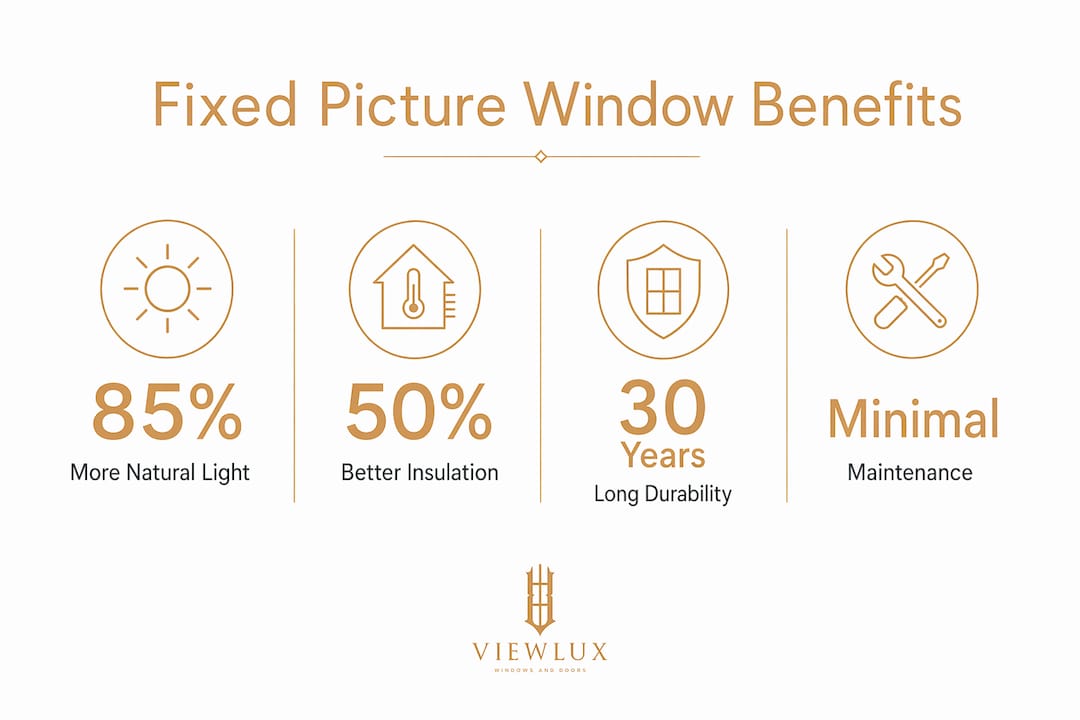
Daylighting from large fixed glazing reduces reliance on artificial lighting, improves occupant mood, and raises productivity. That is not a minor benefit. Natural light quality affects how a room feels at every hour of the day, and picture windows deliver it consistently because their large, unobstructed glass area captures light from a wide sky angle.
The core benefits of fixed picture windows include:
- Unobstructed views. Slim frames keep the focus on the landscape, garden, or skyline beyond the glass.
- Maximum natural light. The large glass area captures more daylight than any operable or divided-light window of the same rough opening size.
- Design impact. A picture window becomes the architectural centerpiece of a room without requiring any additional decoration.
- Low maintenance. No moving parts means no hardware to lubricate, no sashes to adjust, and no weatherstripping to replace.
- Acoustic performance. A sealed, single-pane or insulated glass unit with no gaps delivers better sound attenuation than operable windows with mechanical seals.
Pro Tip: Place a fixed picture window on the wall that faces your most compelling outdoor view, then flank it with narrow operable casements on each side. You get the full visual impact of the picture window plus the ventilation you need without compromising the view.
Are fixed picture windows energy efficient?
Fixed picture windows provide superior insulation by eliminating the air gaps that operable windows create at their sash perimeters. Every operable window has a mechanical seal that degrades over time. A fixed picture window has no such seal because it has no moving parts. The glass unit is set directly into the frame with a glazing bead, creating a continuous, airtight perimeter that does not wear out.
Energy-efficient glazing options significantly affect how a fixed picture window performs across different climates. In hot climates like California and Nevada, low-emissivity (low-E) coatings reflect solar heat gain while still admitting visible light. In colder climates like Colorado, triple-pane insulated glass units with argon or krypton gas fill reduce conductive heat loss through the glass. Selecting the right glazing specification for your climate is as important as selecting the frame material.
Key energy considerations for fixed picture windows:
- Low-E coatings reduce solar heat gain in warm climates and retain interior heat in cold climates.
- Insulated glass units (IGUs) with dual or triple panes and gas fill dramatically lower the U-factor of the window assembly.
- Thermally broken aluminum frames prevent conductive heat transfer through the frame itself, which matters in extreme climates.
- Proper installation with continuous flashing and sealant eliminates infiltration at the rough opening perimeter.
Because picture windows do not open, rooms that rely on them for natural light must include operable windows elsewhere for ventilation. This is a functional trade-off, not a flaw. Thoughtful design pairs fixed picture windows with casements or awning windows positioned for cross-ventilation, so the room gets both the visual impact of the picture window and adequate airflow.
How to choose the right fixed picture window
Selecting a fixed picture window involves more variables than most homeowners expect. Size, shape, frame material, glass specification, and placement all interact to determine the final result. Getting one of those factors wrong affects every other.
Follow this process when specifying a fixed picture window:
- Define the view you want to frame. The window size and placement should be determined by what is outside, not by standard rough opening dimensions. A mountain view calls for a wide, horizontal format. A garden or courtyard may suit a taller, portrait orientation.
- Select the frame material for your climate. Aluminum frames suit modern remodels and perform well across a wide temperature range. Thermally broken aluminum frames are the correct specification for climates with significant temperature swings.
- Specify the glass package for your climate zone. Low-E coatings, gas fill, and pane count all affect the U-factor and solar heat gain coefficient (SHGC) of the assembly. Match these to your local energy code requirements.
- Confirm the structural rough opening. Large picture windows carry significant glass weight. The rough opening header must be sized to carry that load without deflection, which would stress the frame and compromise the seal.
- Plan ventilation before finalizing placement. Identify which walls will carry operable windows for airflow before committing to the picture window location. Ventilation planning done after the fact often produces awkward window arrangements.
- Review sightline requirements. Slim sightline frames maximize the glass area within a given rough opening. If the frame profile is too thick, the visual impact of the picture window is reduced even if the glass size is correct.
Pro Tip: Request a scaled elevation drawing of the wall before ordering. Seeing the window proportioned against the wall height and width reveals placement errors that are invisible on a floor plan.
Selection factors including size, frame material, climate, and glass coatings all affect both performance and aesthetics. Treating any one of them as secondary produces a window that underperforms visually or thermally. Builders who specify fixed picture windows regularly develop a standard glazing matrix for each climate zone they work in, which eliminates repeated specification errors across projects.
Fixed windows can last decades with proper installation and maintenance. The absence of moving parts is the primary reason. There is nothing to wear out mechanically, so the lifespan of a fixed picture window is determined almost entirely by the quality of the frame material, the glazing seal, and the installation.
Key Takeaways
A fixed picture window is the most effective single window type for maximizing natural light, framing views, and reducing long-term energy loss through airtight sealed construction.
| Point | Details |
|---|---|
| Definition | A fixed picture window is a non-operable, large-pane window with slim framing designed to maximize views and light. |
| Not all fixed windows are picture windows | Standard fixed windows have thicker frames and serve daylighting or sightline roles, not focal-point design. |
| Energy performance | Sealed construction eliminates air gaps, and low-E glazing with gas fill reduces heat transfer in any climate. |
| Ventilation trade-off | Pair fixed picture windows with operable casements or awnings to maintain airflow without sacrificing the view. |
| Selection priority | Define the view first, then size the window, select the frame material, and specify the glass package for your climate. |
Why picture windows deserve more attention than they get
I have worked with homeowners and builders across California, Colorado, and Nevada, and the same pattern repeats: picture windows get treated as a luxury add-on rather than a primary design decision. That is backwards. The picture window is the one element in a room that determines how the space feels at every hour of the day. Everything else, the furniture, the finishes, the lighting, responds to it.
The detail most people miss is the relationship between frame profile and perceived room size. A thick-framed fixed window in a large opening still reads as a window. A slim-profile picture window in the same opening reads as a view. That distinction is not subtle once you see it in person. Rooms with true slim-sightline picture windows feel larger and more connected to the outdoors than their square footage suggests.
The trend I find most interesting right now is the pairing of fixed picture windows with thermally broken aluminum frames in high-performance homes. Aluminum gets dismissed as a cold-climate liability, but a properly broken aluminum frame outperforms many wood or vinyl alternatives in thermal resistance while holding tighter tolerances over decades. For builders specifying custom homes in 2026, that combination is the correct answer for most projects.
— Liran
Viewluxwindows fixed picture windows for modern homes
Viewluxwindows designs and manufactures fixed picture windows through a direct-to-consumer model that removes dealer markups, delivering premium aluminum window systems at significantly lower cost than traditional distribution channels.

Every Viewluxwindows fixed window carries NFRC and AAMA certifications, confirming independently verified energy performance and structural durability. The 26-step production process covers frame fabrication, glazing selection, and finish application, with powder coat and anodized options available across a full color range. Homeowners and builders can review upscale residential window packages that include fixed picture window configurations sized for modern architectural designs. Viewluxwindows showrooms are located across California, Colorado, and Nevada for in-person specification support.
FAQ
What is the fixed picture window definition?
A fixed picture window is a large, non-operable window with slim framing designed to maximize views and natural light. It does not open and contains no sashes or operating hardware.
How long do fixed picture windows last?
Fixed windows last decades with proper installation because they have no moving parts to wear out. Frame material and glazing seal quality are the primary factors that determine lifespan.
Are fixed picture windows good for energy efficiency?
Yes. The sealed, non-operable construction eliminates the air infiltration that degrades operable window performance over time. Pairing that sealed construction with energy-efficient glazing options such as low-E coatings and gas-filled insulated glass units produces strong thermal performance in any climate.
Do fixed picture windows require ventilation planning?
Yes. Rooms with picture windows must include operable windows elsewhere for airflow because picture windows do not open. Casements or awning windows placed on adjacent walls provide cross-ventilation without disrupting the picture window’s visual impact.
What frame material works best for fixed picture windows?
Thermally broken aluminum is the most durable and dimensionally stable frame material for fixed picture windows, particularly in climates with significant temperature variation. It holds tight tolerances over decades and supports slim sightline profiles that maximize the glass area within the rough opening.
Recommended
- What Is a Casement Window? A Homeowner’s Guide – ViewLux Windows And Doors, Inc.
- New Construction Window Installation Types: Builder’s Guide – ViewLux Windows And Doors, Inc.
- Retrofit vs. New Construction Window Frames: 2026 Guide – ViewLux Windows And Doors, Inc.
- Aluminum Window Installation Sequence: 2026 Builder Guide – ViewLux Windows And Doors, Inc.


