
Aluminum framing is defined as the superior window and door frame material for durability, structural strength, and long-term value. The core reason why aluminum outperforms vinyl framing comes down to three measurable advantages: a 30–50 year lifespan versus vinyl’s 20–30 years, tensile strength that is 3–6 times greater, and resistance to heat, UV, and salt corrosion that vinyl simply cannot match. Modern thermal-break technology has also closed aluminum’s historic insulation gap, making the energy efficiency argument for vinyl largely outdated. For homeowners and builders choosing between these two materials, the data points clearly in one direction.
Why aluminum outperforms vinyl framing in durability
Aluminum’s durability advantage over vinyl is structural, not cosmetic. Vinyl frames fail in predictable ways: warping under sustained heat above 65°C, seal failure from thermal cycling, and surface chalking that begins within 3–5 years in coastal conditions. By year 10–12, vinyl in salt-air environments shows structural brittleness that compromises both performance and appearance.
Aluminum behaves differently at the material level. Its thermal expansion coefficient is one-third that of uPVC, which means frames hold their shape and hardware stays tight across decades of temperature swings. Powder-coated or anodized aluminum, finished to AAMA 2605 standards, resists salt corrosion and UV fading for over 30 years. That standard matters because it sets a measurable bar for coating durability, not just a marketing claim.
In coastal environments, the gap is especially stark. Vinyl degrades within 10–15 years in high-salt conditions, while properly finished aluminum holds up for 30 or more years. Builders working on beachfront or waterfront projects who specify vinyl are effectively scheduling a replacement job within the warranty period of the building itself.
- Warping resistance: Aluminum maintains dimensional stability at temperatures where vinyl softens and seals fail.
- Corrosion resistance: Marine-grade anodizing and AAMA 2605 powder coating protect aluminum in salt-air environments for 30+ years.
- UV stability: Vinyl chalks and discolors; aluminum retains its finish color under direct sun exposure.
- Hardware retention: Aluminum’s lower expansion rate keeps hinges, locks, and tracks aligned over time.
Pro Tip: When evaluating lifecycle cost, factor in replacement frequency. Aluminum’s longer service life means fewer replacement cycles over a 50-year building lifespan, which directly reduces total project cost even when the upfront price is higher.
How does aluminum’s structural strength affect design?
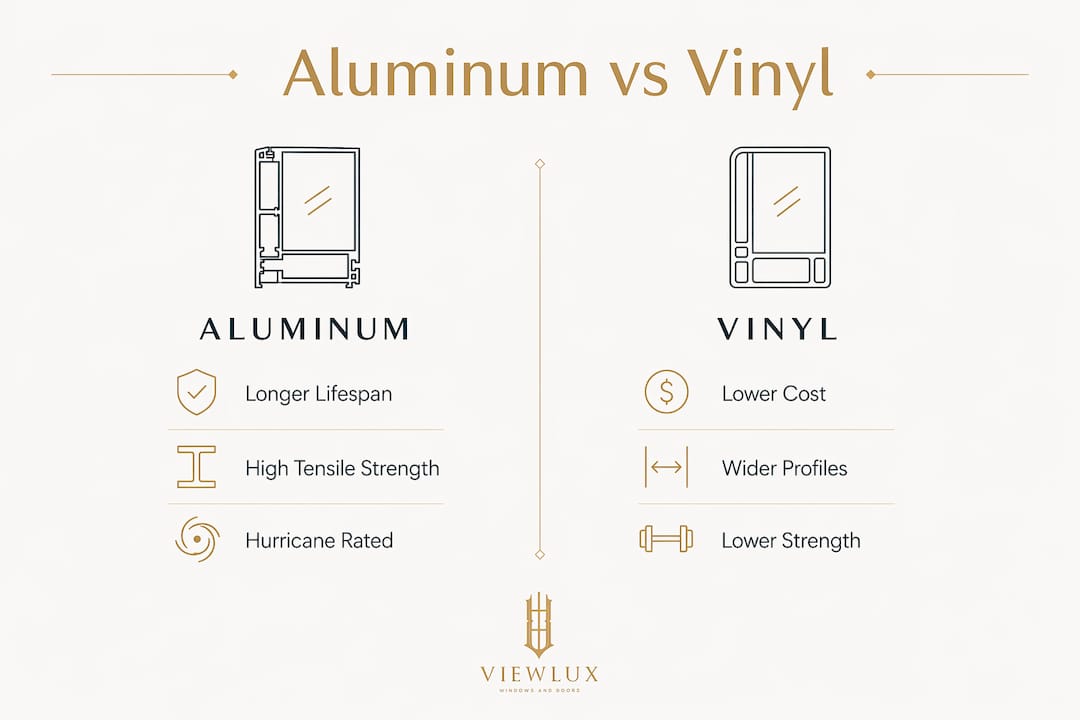
Aluminum’s tensile strength ranges from 90–300 MPa, which is 3–6 times that of uPVC. That gap has direct consequences for what you can build. Aluminum single vents can exceed 1.2 meters in width without reinforcement. Vinyl frames, constrained by thermal expansion and lower strength, require bulkier profiles and internal steel reinforcement to approach similar spans.
The result shows up in frame profiles. Aluminum windows deliver slimmer profiles of 2–3 inches compared to vinyl’s 4–5 inches. Narrower frames mean more glass area per opening, which is the defining aesthetic of modern residential and commercial architecture. Builders specifying floor-to-ceiling glazing, large sliding doors, or curtain wall systems have no practical alternative to aluminum. The material is structurally mandatory for those applications.
For hurricane-rated construction, aluminum’s strength advantage is not optional. Aluminum systems withstand 180 mph wind loads per Miami-Dade hurricane ratings. Standard vinyl systems do not reach that threshold. Builders working in Florida, the Gulf Coast, or any high-wind zone need to account for this difference at the specification stage, not after installation.
| Feature | Aluminum framing | Vinyl framing |
|---|---|---|
| Tensile strength | 90–300 MPa | ~50 MPa (uPVC equivalent) |
| Typical frame profile width | 2–3 inches | 4–5 inches |
| Max single vent width | Exceeds 1.2 m | Limited by expansion |
| Hurricane wind rating | 180 mph (Miami-Dade) | Below hurricane threshold |
| Large-format glazing suitability | Yes, structurally required | Not recommended |
Pro Tip: Builders specifying large sliding doors or multi-panel lift-and-slide systems should confirm aluminum framing from the start. Retrofitting vinyl into those applications requires steel reinforcement that adds cost and weight, eliminating any price advantage vinyl appeared to offer.
The slim sightline benefits of aluminum framing also translate directly to property value. Buyers in the luxury residential market associate narrow frames with premium construction. That perception is backed by real structural performance, not just aesthetics.
Does thermal-break aluminum match vinyl for energy efficiency?
The outdated assumption is that aluminum frames are poor insulators. That was accurate for single-extrusion aluminum frames without thermal breaks. Modern thermally broken aluminum windows have changed the calculation. A 24mm polyamide thermal break separates the interior and exterior aluminum sections, dramatically reducing heat transfer through the frame.
The result is measurable. Thermal-break aluminum windows achieve U-factors of 0.30–0.35, which puts them within 7–12% of vinyl’s typical range of 0.28–0.32. That difference translates to a negligible gap in annual energy costs for most residential applications. The thermal break engineering detail matters here: wider polyamide strips, around 24mm, perform best, and assembly quality determines whether the rated U-factor holds over time.
| Frame type | Typical U-factor | Energy performance gap vs. vinyl |
|---|---|---|
| Standard aluminum (no break) | 1.0–2.0 | Significant |
| Thermal-break aluminum (24mm) | 0.30–0.35 | 7–12% below vinyl |
| Vinyl framing | 0.28–0.32 | Baseline |
For homeowners and builders focused on NFRC-certified performance, the gap between thermally broken aluminum and vinyl is no longer a deciding factor. The aluminum thermal performance guide from Viewluxwindows covers the technical specifications in detail for those who need to verify compliance with local energy codes.
The practical takeaway is direct: modern aluminum frames with quality thermal breaks deliver energy performance close enough to vinyl that durability, aesthetics, and structural strength should drive the final decision. Choosing vinyl purely for energy efficiency is no longer a well-supported argument.
What does aluminum framing actually cost over 30 years?
The upfront price difference between aluminum and vinyl is real but frequently misread. Factory cost for aluminum averages around $120 per window versus $80 for vinyl. At retail, that gap widens significantly, with aluminum reaching approximately $900 per window compared to vinyl’s $625. The retail price gap of 33–50% is driven primarily by installation complexity and premium market positioning, not raw material cost alone.
That upfront premium looks different when spread across a building’s lifespan. Over 50 years, aluminum can be 18% cheaper in total lifecycle costs despite the higher initial price. The math works because vinyl frames often require replacement around year 25, adding a full second purchase and installation cycle. Aluminum, maintained with standard cleaning, typically does not require replacement within that window.
- Replacement cycles: Vinyl replacement at year 25 adds full material and labor costs. Aluminum avoids that cycle.
- Maintenance burden: Aluminum requires only periodic cleaning. Vinyl may need resealing, hardware adjustment, and eventual frame replacement.
- Warranty exposure: Fewer replacements mean fewer warranty claims for builders, reducing liability over the project’s life.
- Contractor margins: Aluminum projects command contractor margins of 35–40% compared to vinyl’s 30%, reflecting the material’s premium positioning.
The lifecycle cost comparison for aluminum versus vinyl shows that the premium pays back over time, particularly for projects where replacement access is difficult or costly.
Pro Tip: When presenting aluminum to a cost-sensitive client, build a 30-year cost model that includes one vinyl replacement cycle at year 25. The total cost of ownership comparison often closes the conversation in aluminum’s favor without requiring any other argument.
Key Takeaways
Aluminum framing outperforms vinyl across durability, structural strength, and total lifecycle cost, with modern thermal-break technology eliminating the historic energy efficiency gap.
| Point | Details |
|---|---|
| Longer lifespan | Aluminum lasts 30–50 years versus vinyl’s 20–30, reducing replacement cycles. |
| Superior structural strength | Aluminum’s tensile strength is 3–6x that of vinyl, enabling slimmer frames and larger glass spans. |
| Thermal-break closes energy gap | Modern 24mm thermal-break aluminum achieves U-factors within 7–12% of vinyl. |
| Lower 50-year total cost | Aluminum can be 18% cheaper over 50 years due to fewer replacements and repairs. |
| Coastal and hurricane performance | AAMA 2605-coated aluminum resists salt corrosion for 30+ years and meets 180 mph wind ratings. |
Aluminum framing in harsh climates: what I’ve seen that changes the decision
I’ve worked with homeowners and builders across California, Nevada, and Colorado, and the pattern is consistent. The clients who chose vinyl for cost reasons in coastal or high-desert climates come back within 10–15 years with frames that have warped, chalked, or lost their seal integrity. The clients who chose aluminum, even at a higher upfront price, rarely call with structural complaints.
What surprises most builders is how quickly the aesthetic argument for vinyl disappears on a real project. The moment you put a slim-profile aluminum frame next to a vinyl frame in a large opening, the visual difference is immediate. Vinyl frames look thick and dated in modern architectural contexts. Aluminum frames disappear into the glass, which is exactly what luxury residential buyers want.
The energy efficiency objection is the one I hear most often, and it is the one that has aged the worst. Thermally broken aluminum from a quality manufacturer now performs within a narrow range of vinyl on any NFRC-certified test. The argument for vinyl on energy grounds made sense 20 years ago. It does not hold up against current product specifications.
My honest recommendation for any builder or homeowner with a 20-plus-year horizon: price out the aluminum option with a 50-year cost model included. The upfront premium is real. The long-term math almost always favors aluminum, and the structural and aesthetic advantages are not available in vinyl at any price.
— Liran
Viewluxwindows aluminum framing for homeowners and builders
Viewluxwindows supplies NFRC and AAMA-certified aluminum windows and doors direct to homeowners, builders, and contractors, cutting out the dealer markup that inflates retail prices by up to 50%. Every product goes through a 26-step production process, with thermal-break frames, marine-grade anodizing options, and AAMA 2605 powder coating available for coastal and high-UV applications.

Builders and homeowners who want to understand how aluminum framing affects property value over time will find Viewluxwindows’ direct-to-consumer pricing makes the premium easier to justify. Showrooms are available across California, Colorado at viewluxcolorado.com, and Nevada. For those ready to specify, the upscale residential window packages catalog covers current aluminum configurations for modern architectural projects.
FAQ
How long do aluminum frames last compared to vinyl?
Aluminum frames last 30–50 years versus vinyl’s 20–30 years. In coastal or high-UV environments, the gap widens further because vinyl shows structural brittleness by year 10–12 while properly coated aluminum holds up for 30 or more years.
Is aluminum framing more energy efficient than vinyl?
Modern thermal-break aluminum windows achieve U-factors of 0.30–0.35, placing them within 7–12% of vinyl’s 0.28–0.32 range. For most residential applications, that difference has a negligible effect on annual energy costs.
Why does aluminum cost more upfront than vinyl?
The retail price gap of 33–50% reflects installation complexity and premium market positioning more than raw material cost. Factory cost for aluminum averages around $120 per window versus $80 for vinyl, but retail prices diverge significantly due to markup and labor factors.
Can aluminum frames handle hurricane conditions?
Aluminum systems meet Miami-Dade hurricane ratings at 180 mph wind loads. Standard vinyl systems do not reach that threshold, making aluminum the required choice for high-wind construction zones in Florida and the Gulf Coast.
What makes aluminum framing better for modern architecture?
Aluminum’s slim 2–3 inch profiles versus vinyl’s 4–5 inches allow larger glass areas and the narrow sightlines that define contemporary residential design. For large-format glazing and curtain wall systems, aluminum is structurally required because vinyl cannot support those spans without heavy steel reinforcement.


