
Energy efficient windows attract buyers because they deliver three things that matter most in today’s real estate market: lower utility bills, measurable comfort improvements, and a certified, documented upgrade that commands a higher asking price. Homes with ENERGY STAR certified windows sell for more than comparable homes with standard windows, and they move faster on the market. For sellers, that combination reduces carrying costs and strengthens negotiating position. For buyers, it means predictable monthly expenses and a home that feels better to live in from day one.
The core buyer-attracting features of energy efficient windows include:
- Reduced energy bills through advanced glazing, low-E coatings, and gas fills
- Improved indoor comfort with consistent temperatures and fewer drafts
- Noise reduction from multi-pane construction and quality seals
- Curb appeal from modern frames and clean sightlines
- Verified performance through ENERGY STAR, NFRC, and AAMA certifications
- Sustainability credentials that appeal to environmentally aware buyers
- Government rebates and tax credits that lower the upfront investment
58% of real estate professionals report that highlighting energy-efficient features increases home value perception among buyers, according to the National Association of Realtors.
Table of Contents
- 1. How new windows improve curb appeal instantly
- 2. Energy savings and lower utility costs attract budget-conscious buyers
- 3. Comfort improvements that buyers feel during a showing
- 4. How windows directly impact resale value and sale speed
- 5. How certifications and manufacturing quality boost buyer confidence
- 6. Government incentives and rebates that make upgrades more affordable
- 7. Common buyer concerns and misconceptions about energy efficient windows
- Viewluxwindows offers certified, direct-to-consumer window upgrades
- Key Takeaways
1. How new windows improve curb appeal instantly
First impressions drive offers. Buyers form opinions about a property within seconds of seeing it, and windows are one of the most visible elements of any facade. Dated, warped, or foggy windows signal neglect. New, well-proportioned windows signal a home that has been maintained.
Modern energy efficient window designs offer slim sightlines, clean frames, and a range of finishes that complement both traditional and contemporary architecture. Replacing single-pane or deteriorating windows with updated units also increases natural light inside the home, which photographs better and shows better during open houses.
Curb appeal benefits buyers notice immediately:
- Modern appearance with updated frame profiles and color options
- Increased natural light that makes interiors feel larger and more welcoming
- Well-maintained exterior that signals overall property care
- Consistent aesthetic across all elevations of the home
- Reduced condensation and fogging that previously obscured views and signaled seal failure
Aluminum windows suit modern remodels particularly well because their narrow profiles maximize glass area without sacrificing structural integrity, a detail that resonates with design-conscious buyers.
2. Energy savings and lower utility costs attract budget-conscious buyers
Buyers increasingly view energy efficiency as a component of housing affordability, not just an environmental preference. When monthly utility costs are predictable and low, the effective cost of ownership drops, and that math matters at every price point.

ENERGY STAR certified windows reduce household energy bills by an average of up to 13% nationwide when replacing single-pane windows. Upgrading from single-pane to double-pane low-E windows reduces energy loss by over 50%, which translates directly into lower heating and cooling expenses year after year.
The technical features that drive those savings:
- Double or triple pane glass with argon or krypton gas fills that slow heat transfer
- Low-E coatings that reflect heat back into the room in winter and block solar gain in summer
- Thermally broken frames that prevent conduction through the window structure
- Quality weatherstripping and seals that eliminate air infiltration
- Low U-factor ratings (ideally 0.22 or below for northern climates) verified by the NFRC label
ENERGY STAR data: Upgrading to qualified models saves 7%–15% on annual household energy bills, depending on geographic location and the type of window being replaced.
Buyers who have experienced high utility bills in previous homes ask about energy performance upfront. Sellers who can point to certified, documented window upgrades answer that question before it becomes a negotiation point.
3. Comfort improvements that buyers feel during a showing
Comfort is harder to quantify than a utility bill, but buyers feel it the moment they walk through a home. Cold spots near windows, radiant heat from south-facing glass, and drafts along the floor are all signs of inefficient windows, and they leave a negative impression that no staging can fix.

New windows reduce drafts, noise intrusion, and maintain more stable indoor temperatures, which ranks among the most valued outcomes homeowners report after upgrading. A standard double-pane window allows approximately 75% of the sun’s heat into a home. ENERGY STAR certified windows reduce that solar heat gain significantly without cutting visible light, so rooms stay bright without becoming uncomfortable.
Comfort and noise reduction benefits that influence buyer sentiment:
- Stable indoor temperatures with no cold or hot zones near window walls
- Reduced radiant heat from low-E coatings that act as a thermal barrier
- Sound transmission reduction from multi-pane construction, especially valuable in urban settings
- Elimination of drafts through quality seals and properly fitted frames
- Warmer interior glass surfaces in winter, so window seats and adjacent furniture areas remain usable
For buyers relocating from noisier neighborhoods or downsizing into denser areas, the acoustic performance of triple-pane or laminated glass units can be a deciding factor. The thermal performance of aluminum window systems is particularly relevant here, as thermally broken aluminum frames combine structural strength with genuine insulation performance.
4. How windows directly impact resale value and sale speed
The financial case for energy efficient windows in a home sale is well documented. Homes with ENERGY STAR certified windows sell for 2%–6% more than comparable homes with standard windows. They also sell approximately 8% faster, which matters when carrying costs, mortgage payments, and market timing are all in play.
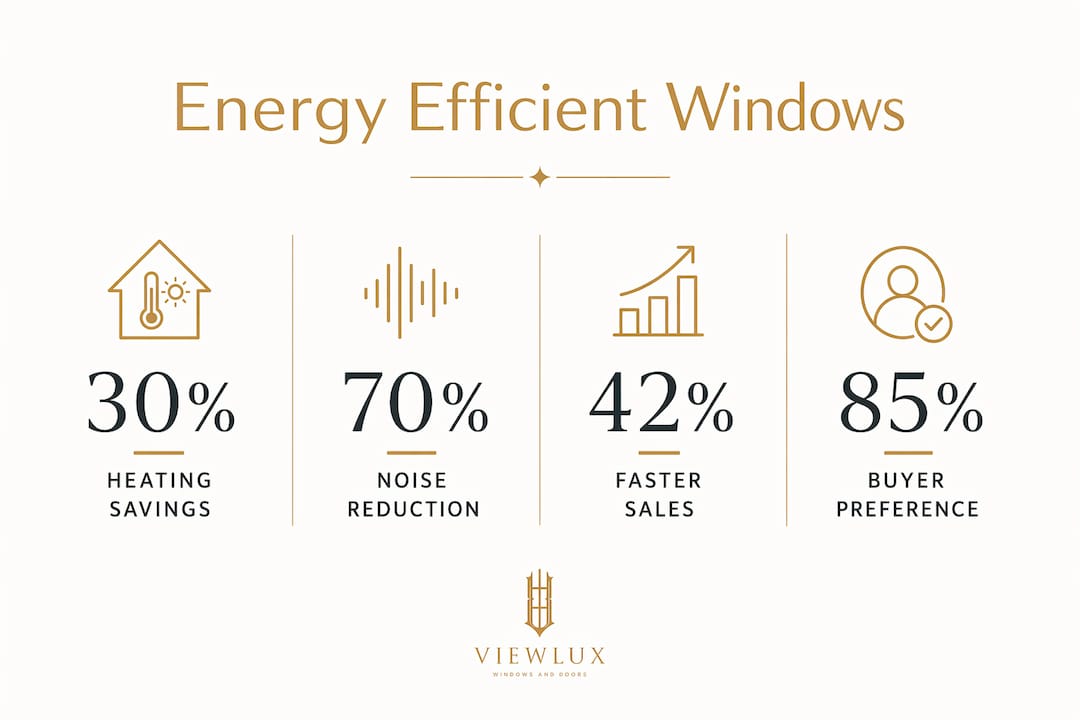
Return on investment varies by region and housing stock. In colder climates where heating costs are high, buyers place a premium on low U-factor windows. In hot southern markets, low SHGC ratings that block solar gain carry more weight. On average, homeowners recoup about 78% of window replacement costs when the home sells, making the upgrade one of the more reliable pre-sale investments available.
Pro Tip: When listing a home with upgraded windows, include the ENERGY STAR certification documentation, the NFRC performance ratings, and any warranty transfer information in the listing packet. Buyers and their agents respond to hard data, and documented performance removes doubt at the offer stage.
Sellers who document window upgrades demonstrate property care and maintenance, which increases buyer trust and market competitiveness, according to research from Elevate’s homebuyer attitudes study.
Material choice also affects ROI. Vinyl windows deliver higher return on investment than wood due to lower upfront cost and broader buyer appeal, while aluminum windows command attention in the premium and architectural segments where design matters as much as performance.
5. How certifications and manufacturing quality boost buyer confidence
Buyers cannot see inside a wall cavity or measure a U-factor during a showing. Certifications solve that problem by providing independent, third-party verification of a window’s actual performance.
ENERGY STAR certification, administered by the U.S. Environmental Protection Agency, confirms that a window meets or exceeds energy efficiency guidelines for its specific climate zone. Every ENERGY STAR window carries an NFRC (National Fenestration Rating Council) label that lists U-factor, Solar Heat Gain Coefficient, visible transmittance, and air leakage ratings. These numbers allow direct, apples-to-apples comparisons between products. The AAMA (American Architectural Manufacturers Association) certification addresses manufacturing quality, structural performance, and water resistance, giving buyers confidence that the window will hold up over time.
Key certifications, quality features, and buyer confidence factors:
- ENERGY STAR label confirms climate-zone-appropriate energy performance
- NFRC ratings provide independently verified U-factor and SHGC data
- AAMA certification validates structural integrity and weather resistance
- Manufacturer warranties that transfer to new owners protect the buyer’s investment
- Documented production processes (such as Viewluxwindows’s 26-step manufacturing sequence) signal consistent quality control
- Low maintenance requirements from durable frame materials reduce long-term ownership costs
Pro Tip: Certified installation is as important as the window itself. Poor installation negates efficiency benefits and can void the manufacturer’s warranty. Always use trained professionals who follow manufacturer specifications, and keep the installation documentation on file for the buyer.
6. Government incentives and rebates that make upgrades more affordable
The upfront cost of window replacement is the most common reason sellers delay the upgrade. Federal and state incentive programs address that barrier directly.
The federal Inflation Reduction Act’s Energy Efficient Home Improvement Credit allows homeowners to claim a tax credit for qualifying window replacements. ENERGY STAR certified windows that meet the most efficient criteria for a given climate zone are eligible. The ENERGY STAR Rebate Finder connects homeowners with local utility rebate programs that stack on top of federal credits, further reducing net cost. Many utilities across California, Colorado, Nevada, and other states offer cash rebates for certified window replacements as part of demand-side energy management programs.
For sellers preparing a home for market, these incentives mean the net cost of a window upgrade is lower than the sticker price suggests. Framing that math for buyers, showing the purchase price of the home, the documented energy savings, and the rebates already captured, strengthens the value narrative at the listing stage.
7. Common buyer concerns and misconceptions about energy efficient windows
Several persistent misconceptions cause buyers to undervalue or misunderstand energy efficient windows during the purchase process.
“All double-pane windows are the same.” They are not. A standard double-pane clear glass window allows approximately 75% of the sun’s heat into a home. A double-pane low-E window with argon fill and a low SHGC rating blocks a significant portion of that heat. The NFRC label is the only reliable way to compare performance across products.
“Triple-pane is always better.” Triple-pane glass provides superior insulation but may offer limited ROI in mild climates compared to high-performance double-pane low-E windows. In a temperate California climate, a well-specified double-pane unit often delivers comparable comfort at a lower cost.
“Energy efficient windows are only for cold climates.” ENERGY STAR certification is climate-zone specific. Southern climate windows prioritize low SHGC to block solar gain and reduce air conditioning costs. Northern climate windows prioritize low U-factor to retain heat. Both deliver meaningful savings in their respective regions.
“The savings aren’t worth the cost.” Heat gain and heat loss through windows account for 25%–30% of residential heating and cooling energy use. Addressing that loss with certified windows produces savings that compound over the life of the home. For buyers planning to stay five or more years, the payback period is well within the ownership window.
Understanding these distinctions helps sellers communicate the real value of their upgrades and helps buyers ask the right questions before making an offer.
Viewluxwindows offers certified, direct-to-consumer window upgrades
Sellers who want to maximize resale value before listing, and buyers who want to upgrade after closing, face the same challenge: premium certified windows typically carry a premium dealer markup. Viewluxwindows removes that markup entirely through direct-to-consumer manufacturing, saving clients up to 50% compared to traditional dealer pricing.
Every Viewluxwindows product carries both NFRC and AAMA certifications, which means the performance ratings buyers and their agents ask for are already documented and transferable. The 26-step production process covers thermal performance, structural integrity, and finish quality, producing aluminum window systems that meet the standards real estate professionals and discerning buyers expect. Showrooms are available in California, Colorado, and Nevada for homeowners who want to see the product before committing.
For sellers preparing a home for market, the factory direct pricing model makes a full window upgrade financially viable where a traditional dealer quote might not. For buyers who have just purchased a home with older windows, the same model applies. Learn more about how premium windows increase property value or request a quote directly through viewluxwindows.com.
Key Takeaways
Energy efficient windows attract buyers because they reduce utility costs, improve comfort, and add certified, documented value that supports a higher sale price and faster close.
| Point | Details |
|---|---|
| Resale value premium | Homes with ENERGY STAR certified windows sell for 2%–6% more than comparable homes with standard windows. |
| Faster sale timeline | Upgraded windows help homes sell approximately 8% faster, reducing carrying costs for sellers. |
| Energy bill reduction | ENERGY STAR certified windows lower household energy bills by an average of up to 13% when replacing single-pane units. |
| Certification builds trust | ENERGY STAR, NFRC, and AAMA labels give buyers independently verified performance data, removing doubt at the offer stage. |
| Viewluxwindows direct pricing | Viewluxwindows offers NFRC and AAMA certified aluminum windows at up to 50% below traditional dealer pricing, with showrooms in California, Colorado, and Nevada. |
Recommended
- Energy Efficient Window Glazing Options for Homes – ViewLux Windows And Doors, Inc.
- Upscale Residential Window Packages: Top Examples for 2026 – ViewLux Windows And Doors, Inc.
- European Aluminum Window System Selection Guide 2026 – ViewLux Windows And Doors, Inc.
- Blog – ViewLux Windows And Doors, Inc.


